Why a hex nut still matters in everyday industrial assembly
A Hex Nut Manufacturer may seem like a simple supplier to evaluate, but in practice the choice affects assembly speed, joint reliability, corrosion behavior, and even maintenance costs down the line. Buyers often start with the assumption that any nut will do. In reality, the difference between a decent fastening component and a problematic one usually shows up after the line is running: stripped threads, loosening under vibration, galling during installation, or extra rework at inspection.
That is why sourcing teams and engineers still pay close attention to the basic hex nut. It is one of the most common threaded fasteners in machinery, fabrication, equipment repair, and general industrial assembly, yet it carries real responsibility in the joint. If the nut does not match the bolt, the material environment, or the tightening method, the whole assembly can become less dependable than it looks on paper.
What this product is and where it fits
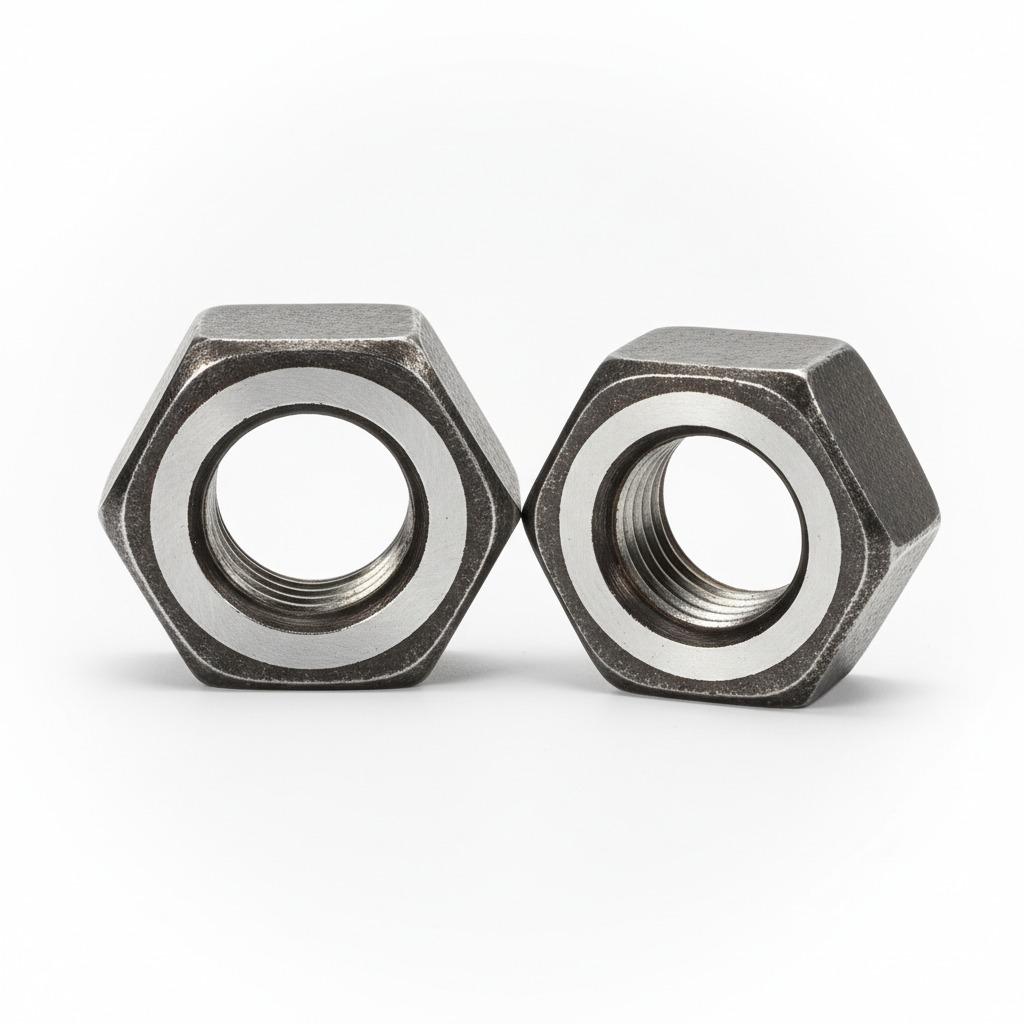
The product described here is a standard six-sided hex nut with internal threads and a metal exterior that appears dark gray to black, with brighter machined edges around the bore. That appearance suggests a practical industrial finish rather than a decorative one. In everyday terms, it is the kind of part used to secure bolts, studs, or threaded rod in equipment assemblies and maintenance work.
Its geometry is straightforward: a hex exterior for wrench engagement and a central threaded bore for fastening. That simple format is part of its strength. It is compact, widely compatible, and easy to handle in the shop. The downside, of course, is that “standard” does not always mean interchangeable without checking the details. Thread size, pitch, grade, and coating still matter, and they matter more than many buyers admit at first pass.
Hex nut types buyers usually compare
When sourcing from a Hex Nut Supplier, the real decision is often not whether to buy a hex nut, but which version fits the application. Two material families come up again and again: Stainless Steel Hex Nut and Carbon Steel Hex Nut.
Stainless steel
Stainless options are often chosen where moisture, cleaning chemicals, or outdoor exposure are concerns. They are not a universal answer, but they are a useful one when corrosion resistance matters more than lowest cost. Buyers should still watch for compatibility with the mating bolt and the surrounding assembly, especially where galling could become a problem.
Carbon steel
Carbon steel nuts are common in general-purpose industrial hardware and are often preferred for strength, cost control, and broad availability. A dark finish, such as black oxide or phosphate-like appearance, is frequently seen in this category, though the exact finish should never be assumed from photos alone. For many internal machinery applications, that is perfectly adequate. For wet or corrosive environments, it may not be.
What to check before placing a purchase order
For sourcing managers, the practical checklist is short but important. Confirm thread size and pitch first. Then verify the material and finish against the service environment. After that, ask whether the nut is meant for general use or a specific mechanical duty. Even a visually ordinary nut can be unsuitable if the assembly depends on a particular strength class or coating system.
A buyer should also ask how the nuts are made. The part may be cold-formed or machined, and either path can be appropriate depending on the target performance and cost structure. The exact manufacturing process cannot be confirmed from appearance alone, so it is better to request process details than to guess based on the finish.
Common mistakes in hex nut sourcing
One common mistake is treating all hex nuts as commodity items with no further review. That approach creates problems when a maintenance team discovers incompatible threads or a production team finds that the finish does not hold up in service. Another frequent issue is over-specifying when the application is actually simple; that can drive unnecessary cost without improving performance.
There is also a tendency to focus only on the nut and ignore the full joint. The bolt material, torque method, vibration level, and ambient conditions all influence whether the fastening system succeeds. A good Hex Nut Factory China or any capable industrial producer should be able to discuss those factors in plain terms, not just quote a part number and disappear.
Practical advice for engineers and sourcing teams
If you are comparing suppliers, ask for clear product identification, not just a catalog image. Request the thread standard, material specification, finish, and any applicable inspection or packaging details. For repeat programs, consistency matters almost as much as raw price. A slightly cheaper nut that arrives with variable thread fit or inconsistent coating can cost more once installation issues start.
For maintenance and repair stocks, standardization can save headaches. Keeping a narrow set of common hex nut sizes and material types reduces confusion on the shop floor. That may sound obvious, but in many plants the spare-parts cabinet tells a different story.
Choosing the right supplier relationship
Whether you are looking for a Hex Nut Supplier for ongoing production or a one-off industrial hardware source, the key is responsiveness backed by technical clarity. A solid supplier should be able to explain the difference between a blackened carbon steel part and a stainless option, and should be honest when a product image does not reveal the full specification.
If you need hex nuts for machinery assembly, repair, or fabrication, the next step is straightforward: define the thread, material, finish, and service conditions before you compare quotes. That small discipline saves a lot of trouble later, especially when the fastener itself is tiny but the failure it can trigger is not.
Quick questions worth asking before buying
What thread standard does the nut follow? Is the finish meant for appearance, corrosion resistance, or simply basic protection? Is the joint static or exposed to vibration? Will the nut be paired with stainless or carbon steel bolts? Those questions do not take long, but they separate a workable purchase from a risky one.