Choose a standard fastener supplier or hex nut manufacturer.
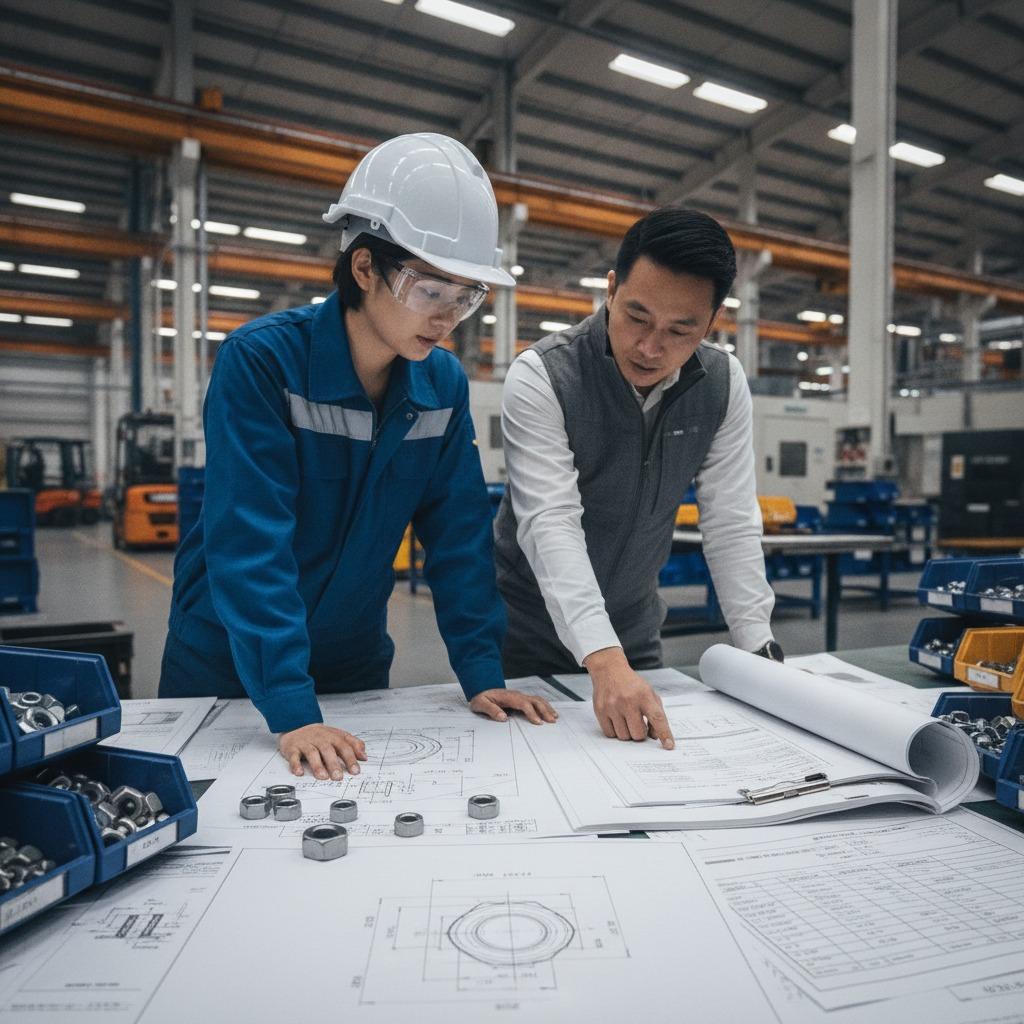
Manufacturing hexagonal nuts sounds simple, but things get complicated when the purchasing team needs to compare parts that look almost identical on paper. The part itself is simple: a hexagonal nut with internal threads, used to mate with a bolt or threaded rod to hold components together. But in the production process, details matter. Material selection, thread consistency, surface finish, and packaging methods can all determine whether the fastener production line runs smoothly or becomes a recurring problem on the shop floor.
For engineers, purchasing personnel, and product teams, the real issue isn't whether hex nuts exist, but whether suppliers can provide nuts that meet application requirements, have a stable supply, and offer consistent performance across batches. This is the true value of a good hex nut supplier.
What is a standard hex nut, and why buyers still need to inspect it carefully?
The geometry of hexagonal nuts is very common: six outer faces for wrench tightening, a circular threaded hole, and chamfered edges for easy alignment during assembly. This simplicity is its advantage in most factories. Hexagonal nuts are widely used in any application requiring threaded connections, such as machinery, equipment installation, automotive repair and maintenance, and structural fastening.
However, the word "simple" can be misleading. Two nuts that look identical may differ in their steel grade, thread tolerances, surface finish, or corrosion resistance. These factors are crucial if the nuts will be subjected to vibration, exposed to the outdoors, or undergo repeated use. Buyers who ignore these factors often end up with nuts that are loose, rusted, or mismatched.
Stainless steel hexagonal nuts or carbon steel hexagonal nuts?
One of the first factors to consider when purchasing is the material. When corrosion resistance is a primary concern, especially in humid environments, with minimal chemical exposure, or for components that require frequent opening for maintenance, stainless steel hex nuts are often chosen. While they are typically more expensive than ordinary steel, their advantages include reduced risk of rust and a cleaner appearance.
In contrast, carbon steel hexagonal nuts are often the preferred choice when strength, cost control, and wide availability are paramount. Carbon steel parts are widely used in general industrial assembly, but their performance depends heavily on the coating or plating and the actual grade available. This last point is particularly important: a glossy surface doesn't tell the whole story. It may look good in a sample box, but it may still not be the best choice in corrosive environments.
What questions should I ask before placing a bulk order with a hex nut factory?
When evaluating hexagonal nut manufacturers in China or other regions , the key factors affecting assembly and repeatability should be emphasized:
Thread standards and size control
Confirm the thread specification (metric or imperial) and ensure the supplier can guarantee thread consistency across batches. A nut that is manually tightened in the sample room but gets stuck on the production line is not a trivial matter; it can slow down assembly and potentially damage mating parts.
Materials and Surface Treatments Disclosure
Clear material identification and surface treatment details are required. The product may be steel, stainless steel, or other alloys, but buyers should not judge solely by color. A shiny metallic appearance is not a specification requirement.
Application fit
Standard hexagonal nuts are not dedicated lock nuts and should not be considered as such. If the application involves vibration, displacement, or access for maintenance, the purchaser may need to use the nut in conjunction with other fastening methods or choose a different type of nut.
Common purchasing mistakes can lead to avoidable problems.
The most common mistake is buying based solely on appearance. The second mistake is assuming all hex nuts from the same supplier are interchangeable. This is not the case. Even slight differences in the quality of the internal thread or the coating can cause batch variations.
Another practical problem is mixed inventory. Sometimes factories receive similar-looking nuts in the same warehouse, only to discover later that maintenance staff have taken the wrong goods. Clear labeling is more important than people realize.
How to compare suppliers without making the process too complicated?
A reasonable list of suppliers typically boils down to four questions: Can the suppliers clearly identify the materials? Can they support the required thread standards? Do they understand the end use, especially in environments involving corrosion or vibration? Can they consistently and reliably supply the quantity you actually need?
If the answers to any of the above questions are vague, it should raise a red flag. When purchasing fasteners, suppliers should ideally describe the parts directly, rather than hiding behind generic catalog language.
The buyer's next practical action
If you're looking for a hex nut supplier for long-term supply, start by reviewing samples and verifying specifications, then check packaging and batch consistency. This might sound overly cautious for simple hardware, but in practice, it often determines whether you have a reliable fastener solution or face unnecessary problems on your production line.
If your application prioritizes corrosion resistance, narrow your choices to stainless steel hex nuts. If cost and versatility are more important, carbon steel hex nuts may be more suitable—provided the surface treatment and operating environment meet the requirements.
In any case, suppliers should make decision-making easier, not more complicated.