What Hex nut manufacturers really need to do right
Hex nut manufacturers are doing more than just producing a hexagonal metal part; they're providing one of the key components that determines whether an assembly is secure. This part may seem simple to engineers, purchasing managers, and maintenance teams. But in reality, choosing a standard hex nut, a stainless steel hex nut, or a carbon steel hex nut can affect assembly speed, corrosion resistance, lifespan, and even the frequency of machine disassembly and rework.
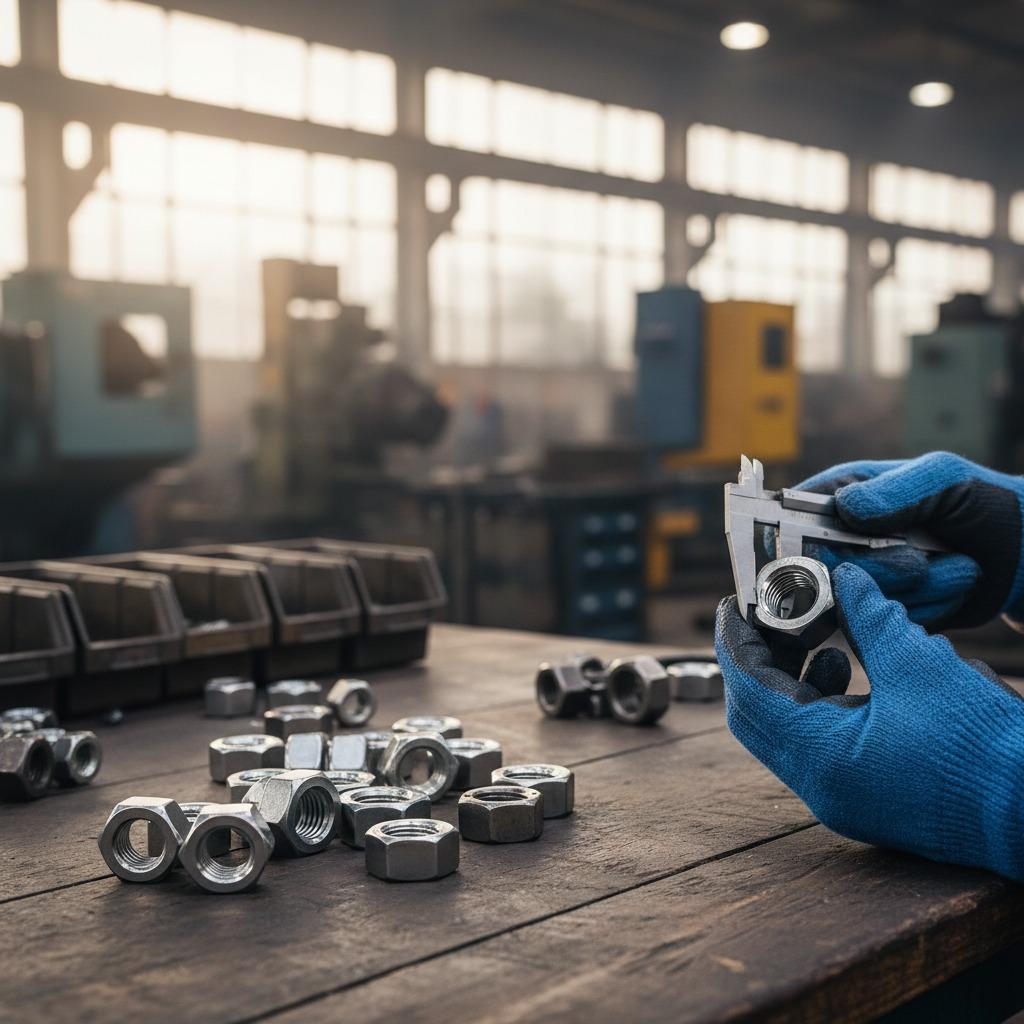
This is why buyers often focus more on the details behind a nut than its shape: the material, thread quality, surface finish, consistency, and whether the supplier can reproduce the same high-performance part. If you're comparing hex nut suppliers, the real question isn't "Can they even manufacture nuts?", but rather "Can they mass-produce consistently high-performance, reliable nuts?"
Why geometry is more important than appearance.
The basic hexagonal outline has its reasons. The hexagonal shape allows for a firm grip, which is extremely useful in mechanical assembly, equipment maintenance, structural fastening, and the installation of general industrial hardware. The central threaded hole is key to the component's function; it mates with the bolt or threaded rod to convert rotational force into clamping force.
Overall, the nut surface is clean, the hole is centered, and the threads engage smoothly. These may sound like minor details, but they are crucial for technicians working within cramped machine tool frames or on production lines requiring rapid, repetitive tightening. Nuts with rough threads slow down assembly, while nuts with poor surface consistency make torque response unpredictable. While not a serious malfunction, this does waste time.
Buyers' commonly used material selection
Stainless steel hexagonal nuts
Stainless steel is often the preferred material for applications requiring high aesthetics, moisture resistance, or corrosion resistance. Its silvery metallic sheen remains intact without the need for coatings, which is highly advantageous for buyers seeking a clean surface and greater supply chain flexibility. However, stainless steel is not suitable for all situations. It can be more expensive than carbon steel, and its grade must be selected based on the intended use.
carbon steel hexagonal nuts
Carbon steel remains a practical choice for a wide range of industrial applications. It is commonly found in general machinery and hardware supplies due to its versatility, availability, and often easier bulk purchasing. Depending on the application, buyers may need to consider surface protection, storage conditions, and whether the nuts are for indoor or outdoor use.
What should buyers check before placing an order?
When evaluating hexagonal nut factories in China or other regions, it's essential to verify some basic information first. Thread size, pitch, grade, surface treatment, and material identification should all be clearly listed in the order documents. If a supplier cannot provide this information without hesitation, it should raise red flags.
For seemingly simple parts, the hidden risk lies in the discrepancies. Two nuts may look exactly the same in a photograph, but their thread properties, surface condition, or dimensional consistency could differ. For buyers, the practical approach is to request samples for confirmation and verify written specifications before placing a production order. This may sound obvious, but it's the root of many purchasing mistakes.
Typical manufacturing method of hexagonal nuts
Hex nuts are typically manufactured using cold forming, forging, or machining processes, followed by threading. The specific manufacturing process depends on the design, production volume, and target performance. Machining may leave subtle concentric marks on the surface of the nut, while formed parts prioritize production efficiency and material utilization. From the buyer's perspective, the manufacturing process is crucial as it affects product consistency, cost structure, and surface finish.
Another practical issue is that if the nut will be used in equipment requiring frequent maintenance, then the frequency of its disassembly and reassembly should be considered. A part that performs well during its first assembly may not maintain the same performance after repeated use.
Making the wrong choice can cause trouble in the future.
The most common mistake is buying based solely on appearance. Shiny metal fasteners don't provide enough information. Another error is assuming all hex nuts are interchangeable, ignoring factors like load conditions, environment, and matching bolts. Furthermore, buyers sometimes overlook the difference between regular nuts and lock nuts when vibrations are present in the application. This oversight can lead to costly mistakes later if the fastening point is prone to shifting.
Supplier Buyer Quick Q&A
Before placing an order, please be sure to ask: What materials is the product made of? What is the thread standard? Is the surface treatment plain or coated? Can the supplier guarantee reproducible production of the same specifications? For industrial procurement, these questions are far more valuable than a long list of vague quality statements.
Choose appropriate resources
Whether you're sourcing from a local hex nut supplier or evaluating hex nut factories in China, the best partner should be able to communicate clearly, quote according to the correct specifications, and ensure consistency from sample to finished product. The product itself may be small, but the purchasing decision is crucial. If you're screening hardware products, first consider the application scenario, then select appropriate materials and surface treatments based on the usage environment, and finally compare prices.
For teams still refining specifications, the next step is simple: clarify thread details, material preferences, and service environment before requesting a quote. This provides suppliers with practical solutions and avoids subsequent guesswork.