Anchoring Infrastructure: How to Secure Bridges That Last Generations
Why Anchoring Is the Hidden Risk in Bridge Construction
Bridge and infrastructure failures rarely begin with a visible crack—they often start with aloosened anchor, acorroded embedded plate, or amisaligned fastening system. These seemingly minor components bear the weight of structural integrity, public safety, and contractor accountability.
In 2023, the American Society of Civil Engineers noted thatover 231,000 U.S. bridges require repair or replacement, and a significant percentage suffer from anchoring system degradation—often due to subpar materials or installation missteps.
At JINGLE, we work with Tier-1 infrastructure contractors who demand anchoring systems that can:
-
Withstand decades of load, movement, and vibration
-
Remain stable through freeze-thaw cycles, flooding, and seismic activity
-
Meet the evolving certification standards of EN 1992, ACI 355, and ISO 898-1
Common On-Site Pain Points from Anchoring Failures
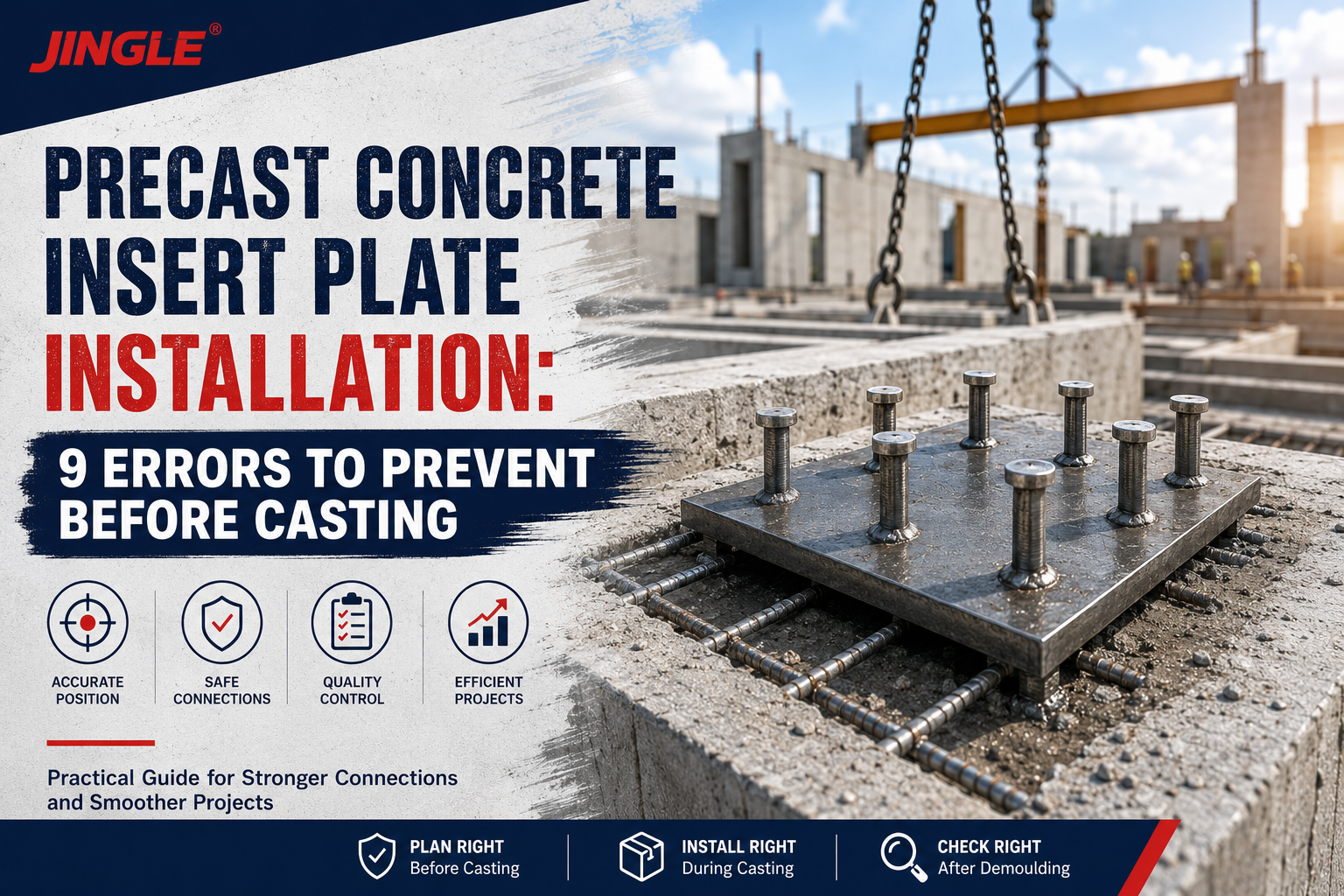
1. Misalignment of Precast Embedded Plates
Reality: In large precast segments (piers, abutments), anchors must be set with millimeter precision. Once concrete is poured, there's no second chance.
Impact: Delays in crane placement, rebar clash, or field welding that violates structural code.
JINGLE Solution: We supplyCNC-milled embedded partswithpre-aligned templatesthat match rebar cage drawings, reducing placement errors to below 2mm variance.
2. Corrosion of Anchor Bolts in Harsh Environments
Reality: Coastal bridges, tunnels, and wet joints are exposed to chloride, humidity, and acidic runoff.
Impact: Oxidized anchors compromise joint tension and may lead to catastrophic failures under stress.
JINGLE Solution: All anchoring systems for outdoor infrastructure can be supplied inSS316L,hot-dip galvanizedorepoxy-coated finishes, certified to pass1,000+ hour salt spray tests(ASTM B117).
3. Seismic Instability and Post-Tension Incompatibility
Reality: In regions with seismic risks (e.g., West Coast, Southeast Asia), anchor systems must absorb displacement without shearing or loosening.
Impact: Bridges may shift, crack, or collapse under earthquake loads.
JINGLE Solution: Our seismic anchor bolts integrateenergy-dissipating collars, meetEN 1998-1ductility classes, and are compatible withpost-tensioned joint systemscommonly used in segmental bridge design.
Engineering Certainty into Critical Infrastructure
Contractors and government agencies don’t just need steel—they needassurance. That’s why JINGLE offers:
-
Torque-calibrated bolt kitsfor consistent field tightening
-
Embedded plate systems with pre-formed guidesfor modular install
-
Anchor tensile test reportsandfield supportfor compliance verification
-
Custom length and thread designto adapt to varying rebar and concrete depths
All solutions are backed by our in-housemechanical simulation,salt spray testing, andmaterial traceabilitydocumentation—because infrastructure needs transparency as much as strength.
Why Industry Leaders Trust JINGLE in the Field
We’re more than a supplier—we are collaborators in construction reliability. Whether for a metro overpass, deep-sea tunnel, or highway expansion:
-
JINGLE’s anchoring systems areready for regulatory audits
-
Designed withreal-world misalignment tolerance
-
Built to function afterdecades of environmental exposure
As one project director from a Southeast Asian transit authority put it:
“We chose JINGLE not just for their product specs, but because their engineering team could read our drawings, suggest a better bracket, and ship it on time.”
Making Every Connection Count in Infrastructure
No matter how grand the design, a structure is only as reliable as its weakest bolt. In infrastructure,that bolt must never be the failure point. JINGLE’s deep understanding of anchoring science, regional compliance, and construction timing makes us the trusted choice for contractors who build things that last.
Our mission? Help you build bridges that still stand firm—50 years from now.