Welcome to our website
logo

Solving Fastener Consistency Issues Across Multi-Plant Automotive Production

  • blog
Posted by JINGLE On Jul 17 2025

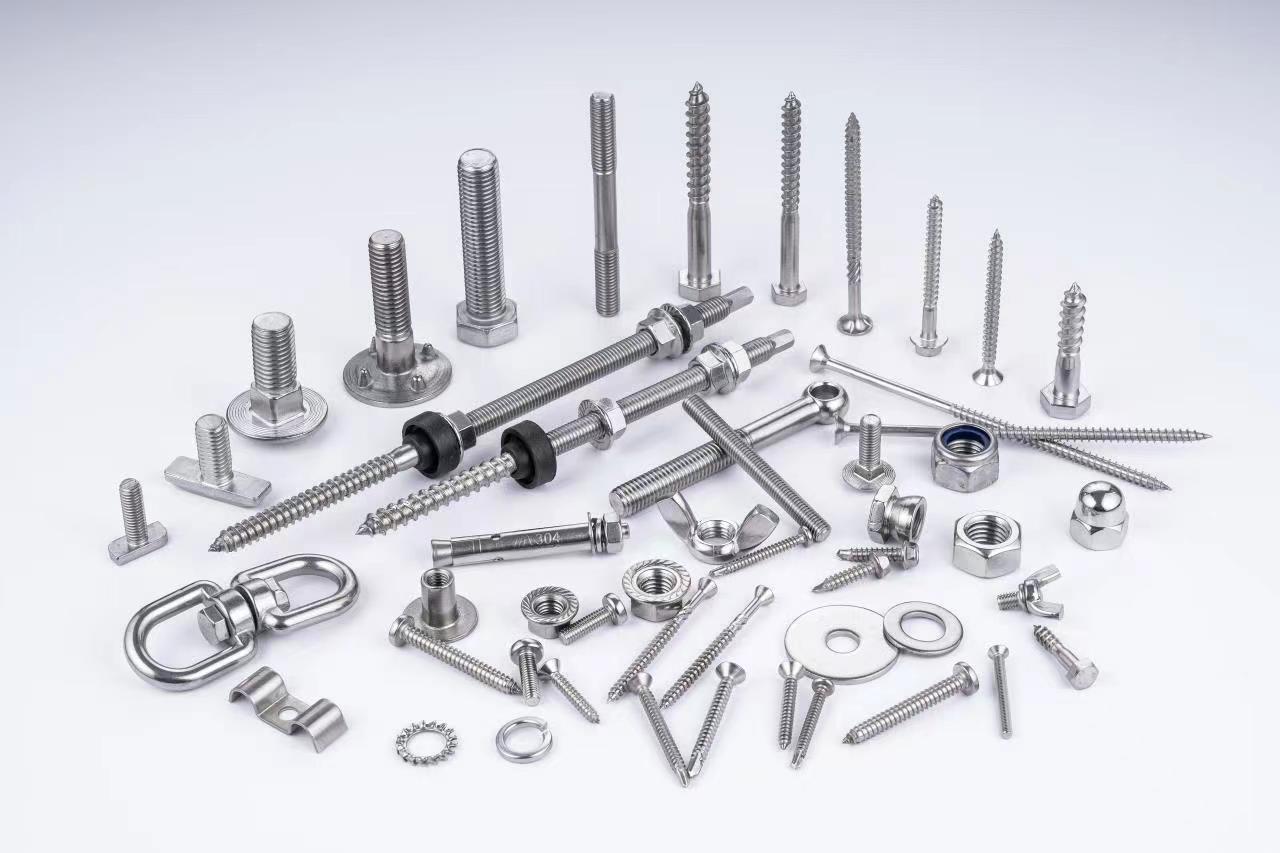
JINGLE consistent automotive fasteners and CNC parts for multi-plant production use

Solving Fastener Consistency Issues Across Multi-Plant Automotive Production

The Real Cost of Inconsistent Batches

For automotive OEMs and Tier 1 suppliers operating across multiple factories—often in different countries—batch variation in fasteners or CNC parts can lead to huge operational disruptions:

  • Misaligned modules

  • Assembly torque variation

  • Incompatibility in vision system recognition

  • Inconsistent paint adhesion or coating color

Fact: A 2024 Global OEM Manufacturing Survey found that28% of vehicle rework was caused by inconsistent component supply between regions, with fasteners among the top three culprits.

Common Issues in Multi-Plant Fastener Supply

Issue Root Cause Risk
Different torque behavior Thread finish or coating variation Over/under torque at one factory
Color mismatch in visual QC Coating vendor or prep process inconsistency Failed vision system or rejection in trim lines
Slight tolerance shifts CNC tooling wear, uncontrolled run-off Bracket fit error, NVH deviations
Lack of batch traceability No cross-plant data linkage Unresolvable warranty or recall path

Use Case: EV Chassis Modules Built in 3 Countries

A global OEM built EV platforms in Hungary, China, and Mexico. Variability in bolt surface and size led to misalignment during final trim installation, halting two assembly lines.

JINGLE’s Response

  • Batch-matched boltswith identical torque coefficients and finish, tested across sample lots

  • CNC production logs shared cross-factory via cloud-linked PPAP documents

  • Master spec file updated for all regions

Result: Defect rate dropped by 91% in Q3 after implementation; no further paint/color detection failures.

How JINGLE Ensures Cross-Plant Consistency

  1. Centralized BOM reference per OEM program

  2. All batches coded and stamped with traceable lot ID + heat number

  3. Test data stored and sharable for every production run

  4. Uniform surface treatments—same vendor, same chemistry

  5. Part photos, torque specs, and finish samples standardized for training across plants

Capabilities That Matter for Global Programs

Feature Benefit
Global spec locking One part = same result in any plant
Cross-plant document access Faster supplier audits and part ID resolution
Shared packaging standards No mix-ups in kits sent to different regions
Same CNC fixtures & QA protocol Geometrical and visual match globally
Test sample kits for PPAP + bench testing Early problem detection and sign-off success

Consistency is Competitive Advantage

In a global manufacturing environment,variation kills scale. If your fasteners don’t match across plants, the results aren’t just inefficiency—they’reproduction halts, audit failures, and damaged supplier relationships.

With JINGLE, automotive OEMs get:

  • Identical part qualityin every region

  • Batch-coded tracking and traceability

  • Documentation, photos, and torque profiles shared across plants

  • Finish, color, and geometry consistency

No matter where your vehicle is assembled,your fasteners should behave like they came from the same bench.JINGLE makes that happen—consistently.

Featured Blogs

Tag:

  • Industrial Application Solutions
Share On
Featured Blogs
Join Us at the 2026 Cologne Hardware Fair – Visit Us at Booth 3.1B078!

Join Us at the 2026 Cologne Hardware Fair – Visit Us at Booth 3.1B078!

Title: Join Us at the 2026 Cologne Hardware Fair – Booth 3.1B078 Summary: Visit us at Booth 3.1B078 during the 2026 Cologne Hardware Fair (March 3-6) to explore new hardware innovations, connect with industry experts, and discover solutions tailored to your needs.

Small Batch CNC Machining: How to Balance Cost, Speed, and Consistency in Real Production

Small Batch CNC Machining: How to Balance Cost, Speed, and Consistency in Real Production

Small batch CNC machining is widely used for prototyping, pilot runs, and low-volume production, but many projects face unstable quality, rising costs, and delayed scaling. This article explains how process planning, material control, and production strategy ensure efficient and repeatable small batch CNC machining.

CNC Milling Parts Supplier: How Complex Geometry Is Controlled in Real Production

CNC Milling Parts Supplier: How Complex Geometry Is Controlled in Real Production

CNC milling parts are widely used in structural components, housings, and precision assemblies, but many projects face dimensional inconsistency and assembly misalignment during production. This article explains how a CNC milling parts supplier controls material behavior, toolpath strategy, and tolerance zoning to ensure stable performance across real industrial applications.

Stainless Steel CNC Turning Parts: How Stability and Wear Resistance Are Achieved in Real Use

Stainless Steel CNC Turning Parts: How Stability and Wear Resistance Are Achieved in Real Use

Stainless steel CNC turning parts are widely used in high-load, corrosive, and long-life applications, yet many projects encounter premature wear, thread failure, or dimensional drift after installation. This article explains how material grade control, turning strategy, surface management, and application-driven process design ensure reliable performance in real industrial environments.

Aluminum CNC Precision Parts: How Process Control Delivers Stability Across Real Applications

Aluminum CNC Precision Parts: How Process Control Delivers Stability Across Real Applications

Aluminum CNC precision parts are widely used in automation, enclosures, and lightweight structures, yet many projects encounter instability after installation or during repeat production. This article explains how controlled material selection, machining strategy, tolerance zoning, and application-driven process design ensure consistent performance across real industrial environments.

Custom CNC Machining Service: How Customization Impacts Cost, Lead Time, and Consistency

Custom CNC Machining Service: How Customization Impacts Cost, Lead Time, and Consistency

Custom CNC machining projects often fail not because parts are complex, but because customization decisions are made without considering process impact. This article explains how material choice, machining strategy, tolerance control, and supplier workflows determine whether custom CNC machining remains stable, predictable, and scalable.