Why buyers care about a self-tapping screw manufacturer
When sourcing a Self Tapping Screw Manufacturer, most engineers and purchasing teams are not just buying a line item. They are trying to reduce assembly problems: stripped holes, split panels, loose joints, finish damage, and inconsistent fit from batch to batch. A screw that looks ordinary on a screen can still cause expensive rework on the line if the thread form, point geometry, or surface finish is off by a little.
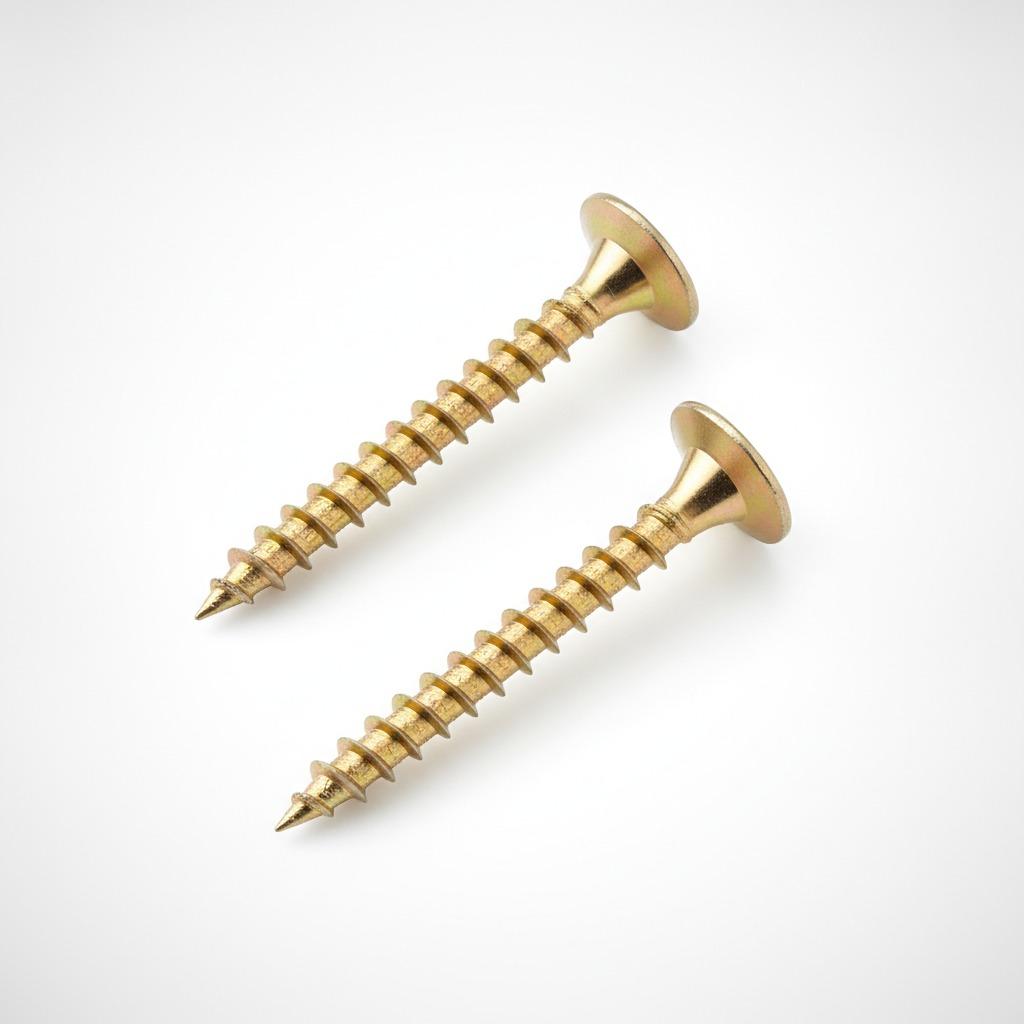
That matters especially in furniture assembly, cabinet work, woodworking, and other interior fastening jobs where the screw has to start cleanly and sit flush without making the panel look tired or damaged. The gold-colored fasteners described here appear to be long, fully or mostly threaded screws with a pointed tip, a countersunk flat head, and a Phillips drive recess. That combination is common in wood-based materials and similar substrates, where quick engagement and a neat finished surface are both important.
What the visible screw design tells you
Even without a full spec sheet, the visible geometry tells a practical story. The coarse thread pitch suggests a screw intended to bite into softer or composite materials rather than rely on fine-thread engagement. The pointed tip supports self-starting, which can speed up assembly and reduce the need for pre-drilling in some applications, although buyers should still test the fastener in their actual material stack. That caution is worth repeating: panel density, adhesive content, and coating all affect real-world performance.
The countersunk head is another useful clue. It is designed to sit flush or slightly below the surface, which helps in furniture and cabinet assembly where protruding heads are a nuisance or a safety issue. The Phillips recess is also familiar to production teams because it is widely used and easy to source tooling for, though it is not always the best choice if torque control is poor on the line. In higher-volume work, drive wear and cam-out can become a real headache.
Fastener selection: the details that matter
For a buyer comparing an OEM Fastener Manufacturer against a general Fastener Supplier, the real question is not only whether the screw is available, but whether the manufacturing process is stable enough for repeated use. Cold forming, thread rolling, and surface plating or coating all influence how the screw behaves during installation. A yellow or gold finish may be decorative, protective, or both, but the exact coating type should be confirmed rather than assumed from appearance alone.
Key checks before you place an order
Start with substrate compatibility. A screw that performs well in pine may behave differently in particleboard, MDF, or laminated composite board. Next, confirm head style and recess type against your tool setup. Then look at thread profile, shank length, and point type, since those details affect starting torque and pull-out behavior. If the product will be visible after assembly, finish consistency matters too. A mismatched gold tone across lots can be surprisingly noticeable on finished furniture.
Also ask for the basics you cannot verify from a product photo: exact dimensions, base metal, coating specification, packaging format, and any relevant test or compliance data. It is better to wait for a drawing or sample than to discover a mismatch after production has started.
Common mistakes buyers make
One common mistake is treating all self-tapping screws as interchangeable. They are not. A screw built for metal sheet is not automatically the right choice for wood-based panels, and vice versa. Another mistake is focusing only on price per piece while ignoring assembly speed, scrap rate, or tooling wear. A cheaper screw that strips under a driver is rarely cheap in practice.
Buyers also sometimes overlook the finish. The visible gold color may be acceptable for interior use, but if the part is exposed to moisture or cleaning chemicals, the coating question becomes more important. Do not guess; get the supplier to define it clearly.
Working with a fastener manufacturer in China
Many teams search for a Fastener Manufacturer in China when they need scale, customization, or a broader sourcing base. That route can work well, especially for OEM programs, but it pays to review the supplier’s drawing control, sampling process, and packaging discipline. Even a strong factory can ship the wrong variant if the specification is vague.
If you are comparing multiple sources, ask each one the same set of questions and compare the answers side by side. Consistency in response is often a better early indicator than a polished sales pitch.
Practical buyer advice
For this kind of screw, request samples and test them in the actual board or wood species you use. Check insertion feel, head seating, surface breakout, and whether the finish survives handling. If the screw is part of a visible furniture assembly, inspect the installed appearance under normal lighting, not just in a warehouse.
When possible, work from a simple approval package: drawing, material note, coating note, sample photos, and a sign-off sample. That keeps everyone aligned and reduces the risk of “close enough” interpretations later on.
What to ask before you shortlist a supplier
If you are evaluating a Self Tapping Screw Manufacturer, ask for the production method, available head and drive options, coating choices, and the ability to support OEM packaging. If you need a recurring program, ask how they manage batch consistency and what happens when a dimension drifts. Those are the questions that separate a dependable partner from a convenient quote.
In fastening, the sample is helpful, but the repeat order is where the real judgment starts.