Why buyers look for a Self Tapping Screw Manufacturer in the first place
When sourcing a Self Tapping Screw Manufacturer, most buyers are not hunting for a commodity part. They are trying to reduce assembly time, avoid thread-forming surprises on the line, and make sure the fastener actually matches the substrate. That matters whether you are building furniture, mounting light fixtures, or putting together panels and hardware assemblies. A screw that starts cleanly, bites reliably, and sits flush enough for the application can save more labor than its unit price suggests.
Self-tapping screws are attractive because they can create grip as they are driven, rather than depending on a pre-cut thread in every case. But that convenience comes with a catch: the screw has to be matched to the material, the head style, and the drive method. A fastener that works beautifully in wood or plastic may be a poor choice for soft metal, and vice versa. That is why buyer teams often want more than a catalog quote; they want a fastener partner who understands the assembly problem.
What this type of screw usually does well
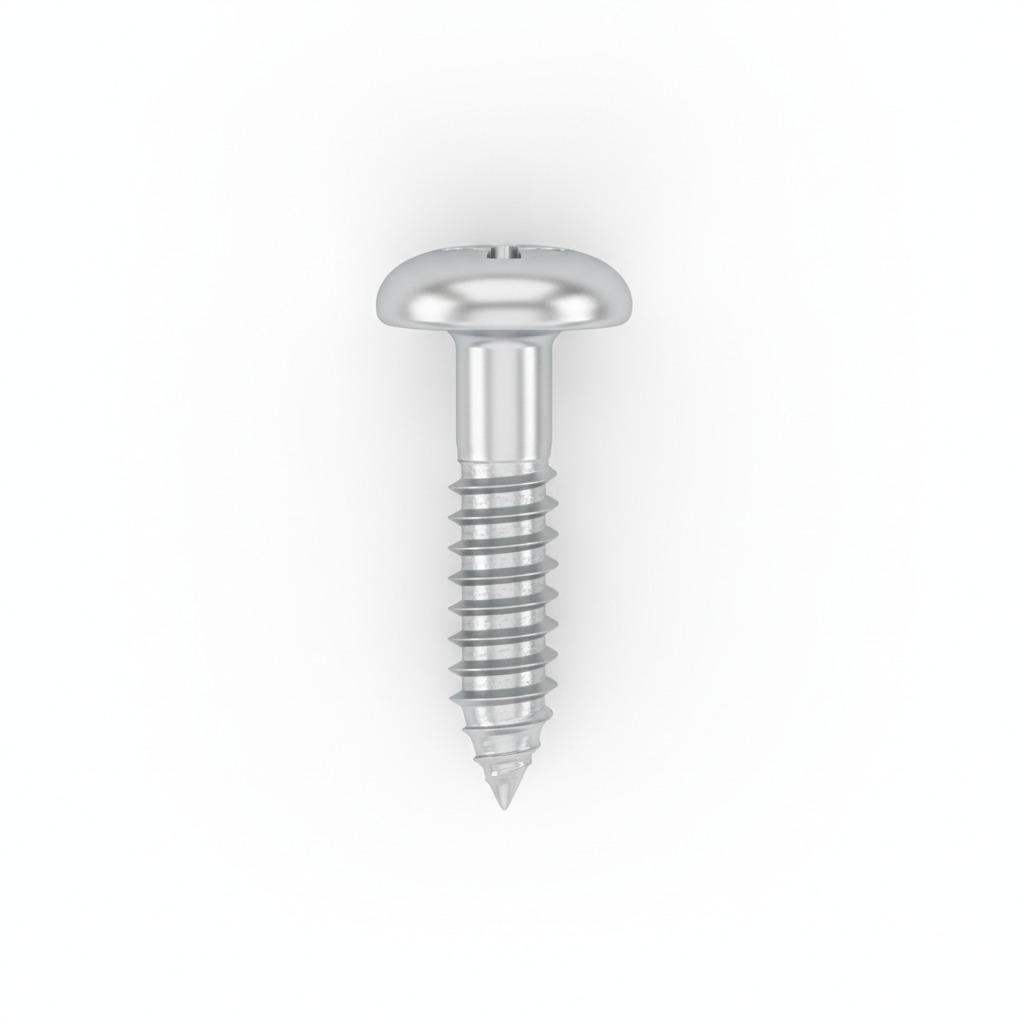
The product style described here is a metal screw fastener with a broad pan or truss-style head, a Phillips-type recess, coarse helical threads, and a pointed tip. In practical terms, that combination is built for straightforward installation and decent load spread. The wider head helps distribute force over a larger surface, which can be useful when fastening panels, brackets, or hardware where surface damage is a concern.
The coarse thread profile is another clue. Coarser threads are often chosen when you want faster engagement and a firmer bite in softer substrates. The pointed tip helps the screw start without a pre-cut thread, though it is worth being careful here: not every pointed screw is suitable for every material. Buyers sometimes assume “self-tapping” is a universal label. It is not. The substrate decides a lot of the story.
Quick buyer reference: what to confirm before you place an order
Before you compare a Fastener Supplier or an OEM Fastener Manufacturer, confirm the basics that affect real-world use:
Does the screw need to work in wood, plastic, sheet metal, or a composite assembly?
Is the head meant to sit proud, clamp a part, or spread load over a larger surface?
Will the Phillips drive suit your assembly tools, or do you need a different recess for better torque control?
Do you need bright plated steel for general indoor use, or a different finish for more demanding environments?
Those questions sound simple, but they prevent a lot of avoidable rework. A screw that looks right on a datasheet can still be awkward in production if the drive strips too easily or the head geometry clashes with the mating part.
How manufacturers usually think about production quality
A Fastener Manufacturer in China, or in any other major manufacturing base, will typically treat this kind of screw as a cold-formed metal part that is threaded and then finished. That sequence is standard enough, but the details matter. Forming quality affects head consistency, thread sharpness, and drive engagement. Plating or coating affects appearance and, more importantly, corrosion behavior and handling feel. Because the visible product shows a silver-colored bright finish, it likely has a zinc-like plated appearance, but exact coating chemistry should always be confirmed rather than guessed.
For sourcing teams, the useful question is not just “can you make it?” It is “can you make it consistently across lots?” Small changes in head height, tip sharpness, or thread feel can ripple through an assembly line. If your product relies on repeated manual driving, those differences will show up quickly in operator feedback.
Common mistakes buyers make with self-tapping screws
One frequent mistake is overfocusing on price and underfocusing on the substrate. Another is assuming that a broad-head screw automatically improves holding power in every situation. In fact, head style, thread geometry, and material selection all interact. If the screw is too aggressive for the part, it can split softer materials or create uneven seating. If it is too mild, it may feel secure at first but not hold up under vibration or repeated handling.
Another practical caution: do not treat “self-tapping” as a substitute for all fastening engineering. In some assemblies, a pilot hole, a different thread form, or a different head profile may be the cleaner choice. A good supplier should be willing to discuss that instead of pushing one generic part.
How to evaluate a supplier without overcomplicating the process
If you are comparing a Self Tapping Screw Manufacturer against other sourcing options, focus on the information that is actually useful. Ask for material confirmation, visible finish description, and whether the screw is intended for the substrate you use. Ask how they control thread consistency and drive performance. If your application is OEM, request documentation and samples early, because drawings alone rarely tell the full story on a fastener this simple-looking.
A supplier who answers clearly about geometry, plating, and application fit is usually easier to work with than one who only repeats nominal dimensions. That is especially true when your product team has to balance cost, assembly speed, and cosmetic appearance.
FAQ: a few questions worth asking upfront
Is this screw only for wood?
Not necessarily. The visible form suggests use in wood, soft metal, plastic, or composite materials, but the exact suitability depends on the substrate and the screw’s detailed design.
Can I assume the finish is corrosion-resistant?
No. A bright plated finish often looks clean and useful for general applications, but the exact corrosion performance is not safe to assume without specification data.
What is the safest buying approach?
Match the screw to the material, confirm the drive and head style, and ask for sample confirmation before committing to a production run.
Next step for sourcing teams
If you are shortlisting a Self Tapping Screw Manufacturer, start with the application, not the catalog picture. Share the substrate, assembly method, and any space or appearance constraints. That gives the supplier a fighting chance to recommend the right fastener, and it gives you a better basis for comparing quotes. In fasteners, the cheapest option is rarely the one that behaves best on the line.