Why buyers care about a Self Tapping Screw Manufacturer
When sourcing fasteners for production or assembly, the difference between a part that drives cleanly and one that strips, splits, or slows the line is often invisible in the catalog photo. That is why choosing a Self Tapping Screw Manufacturer matters. The right supplier is not just selling metal screws; they are helping you control installation behavior, joint consistency, and rework risk across a real production environment.
For engineers and sourcing teams, the decision usually comes down to fit: does the screw geometry suit the substrate, does the drive style match the tool setup, and can the supplier keep the product consistent from batch to batch? Those questions matter whether the screw is going into wood, thin metal, sheet material, or general assembly work.
What the product image suggests, and what it does not
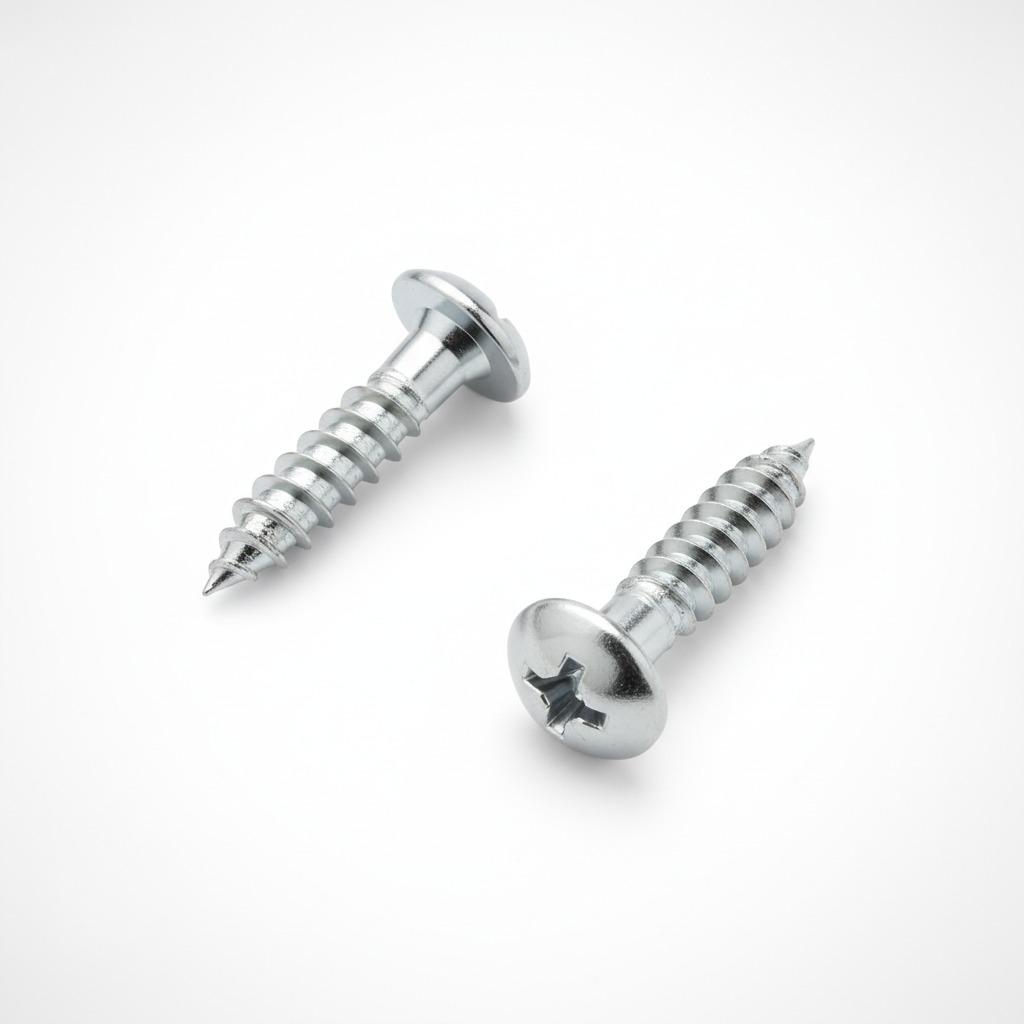
The visible screws in the product image show a few useful clues. One has a pointed tip with a coarse thread profile, which suggests a self-drilling or self-starting fastening style. Another shows a Phillips cross recess and a flat or countersunk-style head. The second piece has a bugle or flat head profile. Both appear to have a silver metallic finish, likely steel or stainless steel based on appearance, though the exact material cannot be confirmed from the image alone.
That caution is worth stating plainly: a screw can look simple and still vary a lot in function. Head style, thread form, point geometry, and surface finish all affect performance. A buyer should never assume that two silver screws with similar silhouettes are interchangeable.
Quick buyer’s view: what to compare
If you are evaluating a Fastener Supplier for this category, the first comparison is practical, not cosmetic.
- Drive type: Phillips, hex, Torx, or another recess that suits your assembly tools.
- Head profile: flat, countersunk, bugle, or another geometry that matches the surface finish requirement.
- Point and thread form: self-starting, self-tapping, or self-drilling behavior depends on the job.
- Base material and finish: steel, stainless steel, or coated steel all change corrosion and strength expectations.
- Consistency: thread formation, head shape, and tip sharpness should remain stable across supply lots.
That last point is often underestimated. A screw that performs acceptably in a sample box can still create headaches if the point dulls, the recess deforms, or the threads vary enough to change driving torque.
How self tapping and related screw types are used
In practice, screws like the ones shown are chosen for fastening where speed and direct installation matter. A self tapping or self-drilling style can reduce the need for additional hardware and simplify assembly. That makes them attractive in furniture, cabinetry, light fabrication, construction, and repair work, as well as in OEM assemblies where line efficiency matters.
An OEM Fastener Manufacturer is often asked to tailor these details to the end-use environment. For example, one project may need a deeper thread bite in softer material, while another may care more about clean countersinking and a flush finish. The same general fastener family can serve both, but only if the geometry is selected carefully.
Selection criteria that actually save time later
A common mistake is to start with price and only later discover that the screw profile is wrong for the substrate. Better sourcing starts with the joint itself.
Ask where the screw will go, what tool will install it, and whether the assembly is manual or automated. If the application uses thin sheet material, drive performance and tip style become more important than they would in softer base materials. If appearance matters, head style and seating behavior matter just as much as holding power.
It is also worth asking the supplier how they control forming quality. For a Fastener Manufacturer in China or elsewhere, the relevant question is not geography alone; it is whether the factory can hold the same geometry across repeat orders and communicate clearly about material, finish, and packaging.
Practical cautions for buyers
Do not assume that “self tapping” means the same thing in every catalog. In the field, that label can cover several related screw types, and the wrong assumption can lead to stripped holes or weak seating. Likewise, a point that looks aggressive may be ideal for one material and too aggressive for another.
Another practical aside: if the application is visible to the end customer, head profile and surface finish are not minor details. They affect the final look of the product, especially in furniture and consumer assemblies.
What to ask before placing an order
A useful sourcing conversation should cover a few basics:
- What substrate is the screw intended for?
- Which head style and drive type are available?
- Can the supplier provide material and finish options?
- Are samples available for installation testing before bulk purchase?
- Can packaging be aligned with your production or kitting process?
These questions are simple, but they prevent the common mismatch between catalog description and real-world use.
Choosing a supplier with production in mind
The best Self Tapping Screw Manufacturer is usually the one that understands your assembly constraints, not just the product category. If you are building a new BOM, starting with a sample evaluation is sensible. If you already have a working spec, the supplier’s job is to reproduce it cleanly and communicate deviations before they become line problems.
For teams comparing suppliers, a short list of sample criteria is often enough to narrow the field: geometry match, visible finish quality, drive fit, and the supplier’s ability to keep ordering simple over time.
If you are in the middle of a sourcing review, the next step is straightforward: request samples, confirm the screw type against your base material, and ask for a clear specification sheet before committing to volume. That small bit of discipline usually pays for itself.