Low-MOQ Custom Fasteners: From Prototype Samples to Repeat Production
Quick answer: low MOQ custom fasteners are not defined by one universally “small” order quantity. A workable low-volume program separates at least four things: the number of pieces needed for engineering learning, the minimum batch created by the chosen manufacturing route, the material and outside-process commitments behind that batch, and the evidence required before parts may enter the buyer's assembly. The safest path is a controlled ladder—prototype, engineering pilot, production-intent validation and repeat production—with a written definition, acceptance gate and change rule at every step.That structure lets a buyer compare a machined bridge route with a forming route without confusing a fast sample with a scalable production solution. It also prevents an attractive unit price from hiding tooling, setup, unused material, inspection, coating, packaging or transition costs.
A buyer usually asks for a “low MOQ” because uncertainty is still high. The design may be moving. Demand may depend on field trials. A spare-parts program may have irregular consumption. A new distributor may not know its reorder curve. Or an established assembly may need a bridge supply while a production tool is being repaired or replaced. Those are different commercial problems, even if the first email uses the same phrase.
The useful question is therefore not, “What is your minimum?” It is, “What is the smallest controlled step that answers our next decision without creating an unacceptable technical or commercial trap?” That change in language is important. It moves the discussion from a sales number to a program design. It also gives engineering, quality, procurement and the supplier a common way to decide what must remain production-intent, what may be provisional and what evidence is worth buying at each stage.
Send your drawing and quantity ladder for a scoped review
1. Treat low MOQ as a staged decision, not a permanent label
“Low volume” has no useful technical meaning until it is tied to time, purpose and process. Twenty pieces for fit checks can be large if every piece needs a different revision. The same quantity can be tiny if it starts a coating line that must process a much larger carrier load. A few hundred pieces might be a complete annual service requirement, yet only a fraction of one efficient forming run. The number alone cannot tell a buyer which constraint is driving the quote.
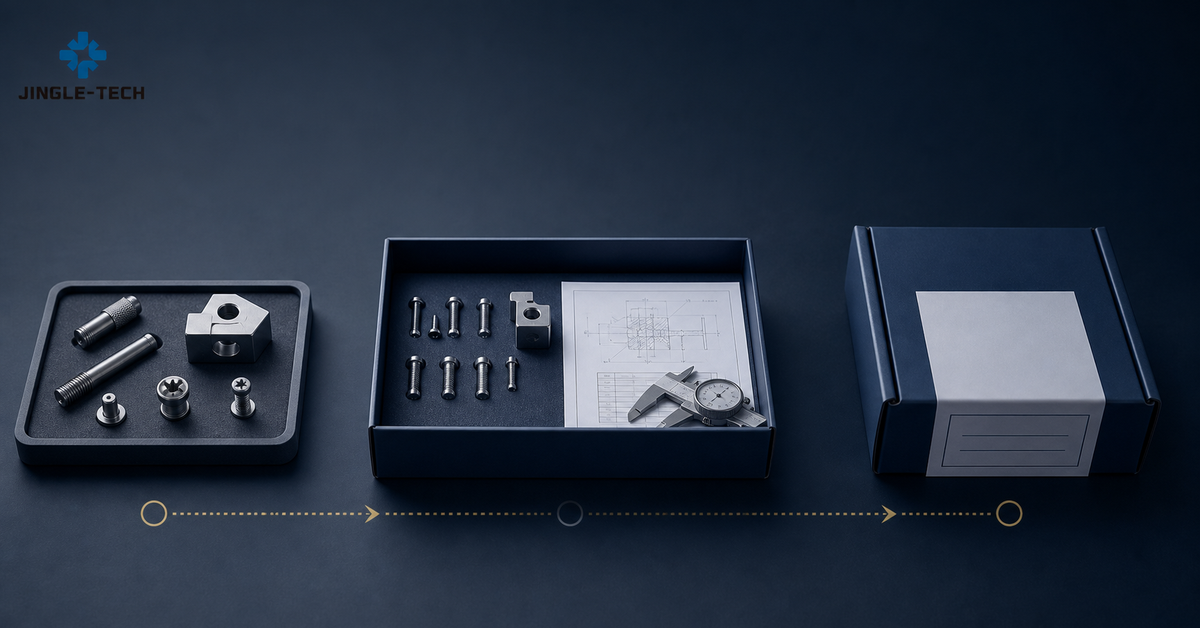
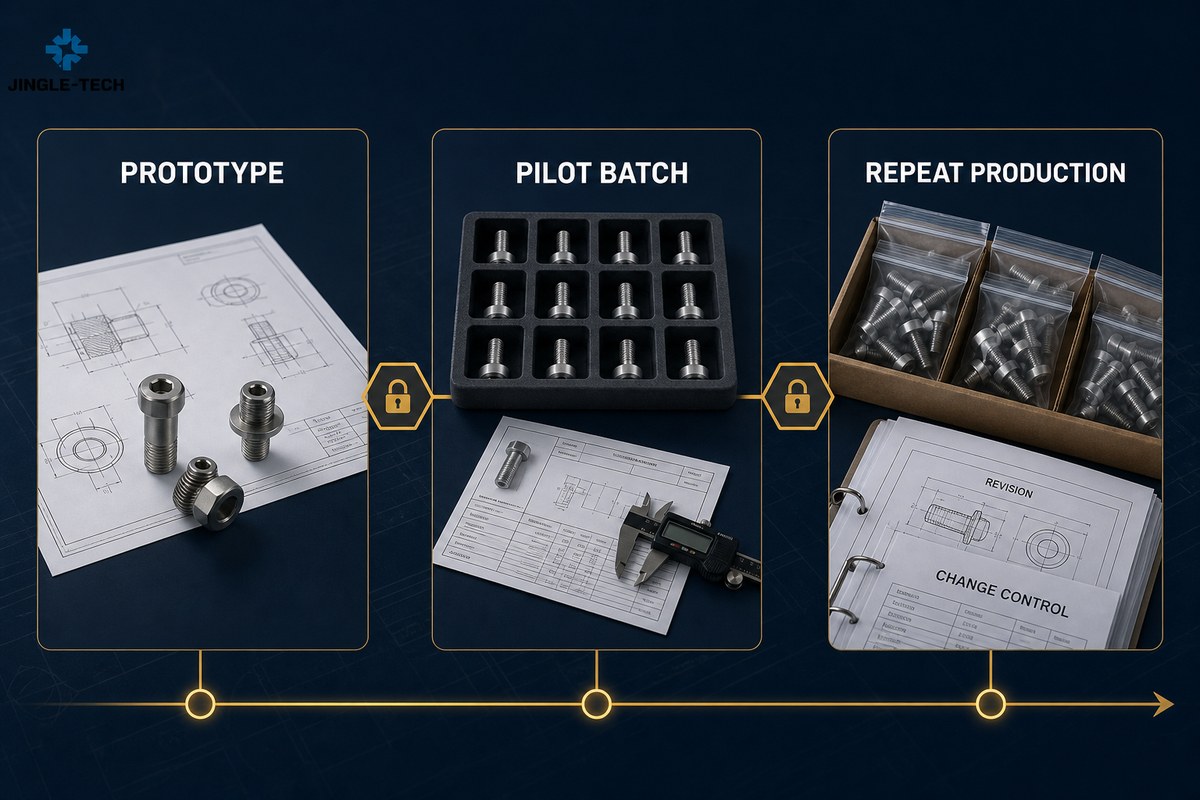
A stage model makes the uncertainty visible. The prototype stage exists to learn about geometry, interfaces, installation and measurement.The engineering pilot tests a more stable definition and a proposed route. A production-intent validation stage checks whether the intended material, process sequence, sub-tiers, tooling, controls, marking and packaging can work together. Repeat production then tests whether those controls survive reorder timing, lot changes and ordinary variation. Names differ by industry and customer; the logic is more important than the label.
Each stage should have an entry condition and an exit decision. If the design is still moving, it may be rational to machine a headed or threaded part from bar even when a formed route could later offer better recurring economics. If material condition or fiber flow is functionally critical, that shortcut may be technically unacceptable. The buyer must decide which attributes the bridge route may change and which must be preserved from the first sample. Calling every sample “production equivalent” merely postpones that conversation.
| Stage | Question to answer | Definition status | Evidence emphasis | Exit decision |
|---|---|---|---|---|
| Prototype sample | Does the concept fit, assemble and expose the expected risks? | Known revision with provisional items called out. | Identity, selected dimensions, material declaration and deviations. | Revise, reject or authorize a pilot baseline. |
| Engineering pilot | Can a stable definition be made and inspected through the proposed route? | Major interfaces frozen; open decisions listed. | Route, first-article results, method suitability and lot identity. | Close gaps or authorize production-intent validation. |
| Production-intent validation | Do intended material, tooling, sub-tiers and controls support the buyer's release method? | Released or controlled under the buyer's approval process. | Agreed approval package, control plan, trace links and packaging trial. | Approve, conditionally approve, rework the plan or stop. |
| Repeat production | Can the approved definition and controls be repeated across orders and changes? | Approved configuration with change triggers. | Lot release, trend/reaction records, traceability and change notification. | Continue, contain, correct or revalidate. |
This ladder does not require every program to purchase every stage. A mature, fully released part may move directly to a production-intent trial.A safety-critical or customer-controlled program may require additional gates. The point is to write down which decision the order is buying. Otherwise a supplier can quote a cheap prototype route while the buyer assumes the price and evidence will carry into repeat production.
2. Separate commercial MOQ, process batch and evidence batch
MOQ discussions become clearer when the buyer stops treating all minimums as one thing. A commercial minimum is the smallest order a supplier is willing to accept under stated commercial terms. A process minimum is the smallest practical batch for a particular route, setup, load, line or outside service. A material minimum is the quantity or commercial unit in which wire, bar, sheet, alloy, coating chemical, patch material or packaging is sourced. An evidence batch is the set of parts and records needed to support the agreed inspection or approval decision.
These minimums can point in different directions. A machine shop might accept a very small order, but the specified alloy may only be available in a longer bar. A former may run a trial with limited material, but heat treatment or plating may impose a separate charge or batch rule. The actual order might be small while the supplier must buy, reserve or process more input than the shipment contains. A quotation should show what happens to the remainder: retained for a named forecast, returned, scrapped, carried as buyer-owned material, or absorbed in price under a written assumption.
Inspection can create its own fixed work.Programming a measurement routine, designing a checking fixture, preparing a first-article report, obtaining a material document, conducting a specified test or building a customer submission package does not shrink in direct proportion to shipped pieces. The same is true of export packaging, labels and lot segregation. Low quantity often raises the evidence cost per shipped piece even when the manufacturing cycle itself is short.
| Constraint | Buyer question | Quotation disclosure | Risk if hidden |
|---|---|---|---|
| Raw material | What purchasable form, condition and source lot support the requirement? | Purchase unit, unused balance, substitution assumptions and trace boundary. | Unexpected surcharge, delayed source change or mixed identity. |
| Primary process | Is the batch machined, formed or produced by another defined route? | Setup/run basis, route-specific deviations and proposed transition point. | A sample passes while the later route changes critical behavior. |
| Tooling and workholding | Which items are temporary, soft, dedicated or intended for reuse? | Ownership, storage, maintenance, life assumption and revision treatment. | Stranded tooling or an unpriced rebuild at reorder. |
| Outside processing | What batch or load does heat treatment, coating or another sub-tier require? | Minimum charge, mixed-load rule, lot split and report scope. | Loss of traceability, schedule surprise or inconsistent finish. |
| Inspection and approval | What result is needed at this stage, and who authorizes release? | Characteristic list, method, sample basis, report and resubmission trigger. | Buyer pays for data that cannot support its decision. |
| Packaging and logistics | How must small lots be identified, protected and consolidated? | Pack quantity, label, preservation, freight and partial-shipment rule. | Damage, mixed revisions or freight dominating landed cost. |
Ask bidders to return these constraints as separate fields. A supplier that can accept a small purchase order may still propose a larger economical batch, but those are different options. The buyer can then choose between paying fixed work now, carrying controlled excess material, combining demand, revising a noncritical requirement or selecting a different route. That is a commercial decision supported by evidence, not a contest to find the smallest number on a website.
3.Freeze the quotation baseline before asking for a sample
A fast sample is useless if neither side can state what it represents. Begin with a controlled product definition: drawing number and revision, 3D model status, unit system, material and condition, applicable product standard, mechanical or performance requirements, thread and tolerance basis, finish, marking, cleanliness, packaging, restricted substances and intended environment. Identify which document wins if the drawing and model disagree. List every unresolved item as an assumption that needs an owner and closure date.
Application information should be sufficient to expose risk without forcing the buyer to surrender unrelated confidential data. Describe mating components, joint function, installation method, access, service environment, expected reuse or removal, regulatory/customer controls and known failure concerns. If torque, clamp load, fatigue, sealing, corrosion, electrical behavior or another function matters, engineering must define the required validation; a familiar fastener designation does not automatically establish joint performance.
Forecast information belongs in the same package. Give the immediate sample need, likely pilot demand, expected repeat-order pattern, annual or project range where known, end-of-life or service demand, and uncertainty. Do not present a speculative forecast as a firm commitment. Mark it as a planning scenario, explain what event changes it and ask the supplier to show where route or tooling economics change. That gives procurement a quantity ladder instead of one misleading unit price.
| RFQ block | Minimum buyer input | Supplier return | Release owner |
|---|---|---|---|
| Configuration | Part number, revision, model/drawing precedence and open decisions. | Acknowledged baseline plus exception list. | Buyer engineering. |
| Material and performance | Adopted specifications, condition and functional requirements. | Proposed source/form, route and verification plan. | Engineering with quality input. |
| Quantity ladder | Prototype, pilot, validation and repeat scenarios. | Price/batch basis, break conditions and capacity assumptions. | Procurement/program management. |
| Evidence | Inspection, document, traceability and approval expectations by stage. | Evidence index, method, gaps, timing basis and resubmission triggers. | Buyer quality/customer authority. |
| Commercial boundary | Incoterm, destination, currency, payment, tooling and inventory assumptions. | Separated recurring and nonrecurring costs with validity conditions. | Procurement/finance. |
| Change control | Events requiring notice, approval or new evidence. | Sub-tier flow-down and proposed notification route. | Authorized customer process. |
Request a drawing-to-RFQ gap review
4. Choose the bridge route and the repeat route deliberately
Low-volume fasteners often create a route decision: machine the early pieces, invest in production tooling sooner, or use a hybrid plan. Machining can avoid dedicated forming tools and accommodate design changes, yet it may use more material and cycle time. Cold forming can support strong recurring economics and material flow advantages for suitable geometry, but it depends on feasible form progression, tooling, material and volume. Warm or hot forming, secondary machining, thread rolling, thread cutting, additive methods for nonfunctional mock-ups and standard-product modification may also enter the discussion. None is automatically “best.”
The buyer should separate geometric similarity from process equivalence. A machined prototype may confirm envelope, head clearance, driver access and mating fit.It may not reproduce formed grain flow, residual stress, work hardening, surface condition, corner fill or the exact heat-treatment response. A printed polymer model may help evaluate handling while being wholly unsuitable for load testing. A modified catalog fastener may speed an assembly trial, but its source material, prior heat treatment and traceability may limit what the result proves.
Write a route-equivalence matrix before approving a prototype. For every characteristic or function, state whether the sample route is representative, conservative, nonrepresentative or simply unknown. Then define what must be revalidated when the route changes. This prevents “sample approved” from becoming a blanket authorization for a later process that was never evaluated.
| Route option | What it may answer well | What it may not represent | Required buyer decision |
|---|---|---|---|
| Machined bridge part | Geometry, assembly access, thread engagement and selected dimensional studies. | Formed material flow, forming effects, production-rate route and some surface conditions. | Approve listed deviations and define revalidation at route transfer. |
| Prototype or soft tooling | Early formed geometry and development of a process concept. | Final tool life, production-rate stability and long-run maintenance pattern. | State which tool changes trigger new evidence. |
| Production-intent tooling | Representative route, control planning, approval and repeat economics. | Future demand stability or immunity to design change. | Accept investment and configuration risk under written ownership terms. |
| Modified standard fastener | Some interface, length, clearance or assembly-learning questions. | Full custom definition, source history and intended process sequence. | Limit use to named learning objectives and control identity. |
A hybrid route can be sensible: machine prototypes, use provisional tooling for an engineering pilot, then release production-intent tooling only after the interface is stable. It can also be wasteful if the machined route masks the very behavior the test is supposed to study. Engineering should own that distinction. Procurement should price the transitions. Quality should define the evidence repeated at each transition. The supplier should identify feasibility gaps and avoid presenting one route as equivalent without an agreed basis.
5. Compare total program cost, not the first sample's unit price
A low-volume quote usually contains fixed, step-fixed and recurring costs. Fixed work may include engineering review, process planning, programming, gauges, fixtures, dedicated tools or an approval package. Step-fixed work recurs by setup, order, batch, outside-process load, report or shipment. Recurring cost follows material, machine or forming time, consumables, inspection and handling. A single unit price can hide all three.
Build a cost model by stage. The prototype stage should show its route, nonrecurring work, material purchase basis, inspection scope and freight. The pilot should show what is reused, what changes and what new evidence appears. The repeat scenario should disclose the economic batch and assumptions behind the price. If tooling is amortized, state the volume and time basis; if charged separately, state ownership, maintenance, storage, modification and end-of-life rules.Never assume that “tooling included” means the buyer owns a transferable asset.
A practical comparison uses a formula rather than an invented market price:
| Cost field | Prototype | Pilot/validation | Repeat scenario | Required note |
|---|---|---|---|---|
| Engineering/setup | State amount/basis. | State reused versus new work. | State per-order or per-batch recurrence. | Trigger, deliverable and refundability if any. |
| Tooling/fixtures/gauges | Temporary items. | Production-intent additions. | Maintenance and replacement basis. | Owner, location, identification and revision. |
| Material commitment | Purchasable unit and use. | Balance carried forward. | Reorder/source assumptions. | Disposition of unused or obsolete stock. |
| Outside processes | Minimum charge/load. | Production-intent route. | Batch and report basis. | Sub-tier, lot split and mixed-load assumptions. |
| Evidence/approval | Prototype report. | Agreed validation package. | Routine release documents. | Submission, retention and resubmission scope. |
| Logistics/landed cost | Express or consolidated. | Pack trial and destination. | Pack quantity and shipment cadence. | Incoterm, taxes/duties allocation and exclusions. |
Normalize all bidders to the same quantity ladder and evidence definition. If one quotation includes first-article reporting, a dedicated gauge and a separate coating batch while another excludes them, the unit prices are not comparable. Commercial leverage comes from understanding the cost architecture: the buyer can combine releases, standardize packaging, approve a readily available material form, delay dedicated tooling or accept controlled excess inventory. None of those choices should be made by silently reducing a technical requirement.
6. Buy the evidence needed for the next gate—and no less
The evidence plan should answer a decision, not decorate a shipment. A prototype may need identity, revision status, a selected dimensional report and explicit route deviations. A pilot may require a fuller first-article inspection, material documentation, process-flow summary and traceability demonstration. A production-intent batch may add the customer's approval submission, capability or performance evidence where specified, packaging validation, control plan and sub-tier records. Routine repeat orders then follow the approved release and retention plan.
Terminology matters. A first-article inspection is a comparison of the manufactured part against defined characteristics under an agreed method; it is not automatically the same as customer production approval. “PPAP” should be used only when the customer has actually required an applicable submission method and scope. AIAG's official Production Part Approval Process page describes PPAP as a process for showing that engineering design records and specifications can be met during an actual production run at production rates. It does not make every low-volume fastener order an automotive PPAP program, and it does not give a supplier authority to approve its own submission.
Inspection documents have a separate purpose. The official ISO page for ISO 16228:2017 identifies declarations of compliance and several types of test reports that may be requested at the time of order. Its scope also says it does not apply to special-purpose or specially engineered applications requiring other procedures, such as initial samples. That boundary is particularly relevant here: a routine fastener test report can be useful, but it should not be presented as a substitute for a project-specific first-article or production-approval decision.
| Evidence object | Prototype use | Pilot/validation use | Repeat-production control |
|---|---|---|---|
| Configuration record | Identify exact revision and approved deviations. | Close or disposition open items. | Protect approved baseline and change status. |
| Dimensional/visual results | Selected learning characteristics. | Agreed first-article scope with methods. | Routine sampling/control per approved plan. |
| Material and process documents | Declare source/form and nonrepresentative items. | Link intended material and outside-process records. | Maintain lot and report linkage required by order. |
| Performance validation | Only tests valid for the sample route. | Buyer-approved method and production-intent conditions. | Revalidation and monitoring triggers. |
| Traceability | Sample identity and source record. | Forward/backward route demonstration. | Defined lot boundary, retention and containment link. |
| Customer submission | Normally not implied by “sample.” | Only the agreed customer-specific content and level. | Approval status, retained items and resubmission rule. |
Ask for an evidence index before placing the order. It should name each document, the stage in which it appears, the responsible provider, the governing requirement, the part/lot identity it covers, the delivery format and any open assumption. This prevents a common late-stage dispute: the supplier priced a basic inspection report while the buyer expected a full approval package.
7. Connect APQP-style gates to the actual customer requirement
Automotive buyers may use APQP, Control Plan and PPAP requirements. Other sectors may use different launch and approval systems. Even within automotive supply, customer-specific requirements control the details. The transferable principle is gated planning: feasibility is not release; a sample is not process approval; process approval is not permanent permission to change material, tooling, source or site.
AIAG's official APQP third-edition overview says the current manual added material on sourcing, change management, program metrics, risk-mitigation plans, gated management and part traceability. AIAG also separated Control Plan into its own first-edition manual. The official Control Plan page describes guidance for developing and using control plans, including a safe-launch phase. These references support a disciplined transition model; they do not create a universal submission package for every small order.
For a nonautomotive purchase, the team can borrow the clarity without applying a label the customer did not request. Define a feasibility gate, an engineering sample gate, a production-intent evidence gate and a repeat-release gate. Name the inputs, outputs, approvers and unresolved-risk process at each. If the customer does require APQP or PPAP, use the current authorized manual, applicable customer rules and contract rather than this summary.
| Gate | Required input | Supplier output | Buyer decision |
|---|---|---|---|
| Feasibility | Controlled RFQ, forecast scenarios and required evidence. | Route, assumptions, exceptions, sub-tiers and risks. | Authorize quotation baseline or request clarification. |
| Prototype authorization | Purpose, sample definition and permitted route deviations. | Identified samples and agreed report. | Accept learning, revise definition or stop. |
| Pilot/validation authorization | Stable baseline, intended route and evidence index. | Trial lot, results, control proposals and open-gap log. | Close gaps, approve conditionally or repeat the trial. |
| Production release | Customer-defined approval requirements. | Complete agreed submission and recurring control basis. | Approve through the authorized customer process. |
| Repeat-order review | Forecast, configuration and elapsed-time/change status. | Reorder confirmation, source/tool status and new risks. | Release, request new evidence or re-source. |
Do not force every stage into a long document package. The gate can be a concise signed record if the risk is low and the customer permits it. What matters is that the record preserves the approved baseline, route, evidence, deviations, decision and authority. That small discipline is especially valuable when orders are months apart and project memories fade.
8.Build inspection around the characteristic and the decision
Low quantity does not justify vague inspection. It does change how the team balances setup, destructive testing, statistical inference and risk. A buyer should create a characteristic matrix: requirement, drawing location, manufacturing step, proposed measurement or test method, acceptance source, sample basis, record, reaction plan and release owner. Characteristics tied to safety, fit, sealing, installation or regulatory/customer controls deserve explicit treatment; “all dimensions checked” is not a method.
Calibration status alone is not enough. The instrument, fixture, datum simulation, resolution, range, environment, operator method, software and decision rule must be suitable for the characteristic. NIST's Policy on Metrological Traceability explains that metrological traceability belongs to a measurement result and depends on a documented unbroken calibration chain in which each link contributes to uncertainty. NIST also warns that traceability alone does not guarantee fitness for purpose and does not certify another organization's result simply because NIST appears somewhere in the chain.
That distinction changes the supplier question. Instead of asking whether a gauge is “NIST traceable,” ask what measurement result is being reported, which method and reference chain support it, what uncertainty or fitness rationale applies, how the part is fixtured and which acceptance decision the result supports.For a low-volume run, the buyer may choose broader dimensional coverage or a targeted risk-based plan, but the choice must be documented before parts are measured.
| Planning field | Question to close | Record expected |
|---|---|---|
| Requirement source | Which drawing, standard, customer document or contract clause controls? | Controlled characteristic list with revision. |
| Creation point | Which operation creates or changes the characteristic? | Process-flow/control-plan linkage. |
| Method fitness | Can the proposed method resolve the requirement under actual conditions? | Method, fixture, equipment and rationale. |
| Sample basis | What population, risk and agreement determine the checked pieces? | Approved inspection or validation plan. |
| Result identity | Can each result be tied to the part, lot, method and revision? | Report with traceable identifiers. |
| Reaction and release | Who contains, dispositions and authorizes shipment when a result misses? | Nonconformance, concession and release record. |
9. Use fastener standards within their published scope
A standard number can improve a purchase order only when the buyer reads its scope and connects it to the part.ISO's official page lists ISO 16426:2002 as current after confirmation in 2023. Its abstract covers a fastener quality-assurance system for manufacturers and distributors from receipt of raw material through manufacturing and delivery. That makes it a useful reference when discussing how specified characteristics flow through a controlled route. It does not certify a supplier, approve a part or replace the buyer's application-specific requirements.
Acceptance inspection has an important boundary. At the editorial check date, ISO lists ISO 3269:2019 as the published edition, confirmed in 2024 and expected to be replaced by a draft under development. Its abstract says the purchaser procedure applies where no prior agreement exists. It also excludes fasteners intended for high-volume machine assembly, special-purpose uses and specially engineered applications that require more advanced in-process control and lot traceability. A custom low-volume part may be specially engineered even though its quantity is small. The parties should not paste “inspection to ISO 3269” into the purchase order without checking that boundary and the current status.
When the application needs more specific controls, define them by agreement. State which version of each standard applies, which characteristics are governed, what takes precedence, what inspection or test evidence is required and how deviations are authorized.Recheck standards at the order date. A page written today cannot freeze a future revision or customer-specific rule.
Do not confuse acceptance sampling with process control
Acceptance activity decides what to do with a submitted inspection lot under stated rules. Process control is the continuing discipline used to make the product and react to variation. One cannot repair the absence of the other. A small shipment may tempt a buyer to inspect every piece, but full screening of selected characteristics does not prove the underlying process is capable or that unmeasured functions are controlled. Conversely, a stable process claim does not remove the need for the agreed release evidence.
Write both layers. The control plan or equivalent record should describe how requirements are maintained during production. The acceptance or release plan should state what must be reviewed before shipment or use. The buyer then knows what an inspection report means—and what it does not mean.
10. Control the handoff from prototype to repeat production
The riskiest moment is often not the first sample. It is the quiet handoff after the sample works. The purchase order grows, a different material lot arrives, production tooling replaces a temporary fixture, the coating moves to a normal batch, packaging changes and a new operator or sub-tier enters the route.If those differences are not listed, everyone may believe the “same part” is being reordered while the manufacturing evidence has materially changed.
Create a transition register before the prototype is approved. One column describes the sample condition. A second describes the intended repeat-production condition. A third explains the potential effect. A fourth names the verification needed before the transition. A fifth records the approving authority. The register should cover product definition, material source and condition, manufacturing method, tooling, equipment or site where relevant, thread method, heat treatment, surface treatment, inspection, marking, packaging and sub-tier route.
Not every difference requires a full program restart. A change in carton size may need a packaging check, not a new material test. A switch from cut to rolled threads may affect geometry, surface and fatigue behavior and therefore deserves engineering review. A move from machining to forming can change several characteristics at once. The decision must come from the released requirements and risk analysis, not a generic checklist.
| Transition item | Prototype condition | Repeat condition | Decision/evidence to define |
|---|---|---|---|
| Primary manufacturing route | Record actual route and deviations. | Record intended route and tooling. | Engineering equivalence review and revalidation scope. |
| Material | Source, form, condition and lot. | Approved production source/form. | Material evidence and source-change trigger. |
| Thread creation | Cut, rolled, formed or modified as actually supplied. | Intended production method. | Dimensional, surface and functional review as applicable. |
| Heat treatment/finish | Actual processor, batch and report. | Approved processor and routine batch model. | Process-specific evidence and reapproval trigger. |
| Inspection | Prototype methods and coverage. | Routine control and release methods. | Correlation, method fitness and control-plan authorization. |
| Packaging/label | Sample protection and identity. | Production pack quantity and label format. | Pack trial, preservation and traceability check. |
Repeat ordering also needs a dormancy rule.If a tool, material, process or site has not produced the part for a defined period, the team should review storage condition, calibration, maintenance, source availability, revisions and customer requirements before release. The threshold is project-specific. The supplier should not promise indefinite restart readiness, and the buyer should not assume it.
11. Make every supplier quote answer the same questions
A comparison fails when Supplier A prices a machined sample with selected inspection, Supplier B prices formed production-intent parts with tooling, and Supplier C assumes a catalog fastener modification. All three may be honest. Their totals still answer different questions. Procurement needs a bid-return form that makes route, batch, evidence and transition assumptions visible before ranking cost.
Ask each bidder to quote the same named scenarios rather than offering one “best MOQ.” For example, Scenario P is the immediate prototype need at the stated revision. Scenario V is the production-intent validation batch. Scenario R is a repeat order at the buyer's planning quantity and cadence. The buyer supplies the quantities; the bidder states commercial minimum, economic batch, price basis, setup, material commitment, tooling, outside processes, inspection, pack, timing assumptions and exclusions for each.
A bidder may recommend another scenario. That is useful if it is returned alongside the requested baseline, not instead of it.The alternative should explain which constraint is being improved and what new inventory, design, evidence or transition risk it creates. For low MOQ custom fasteners, this normalization exposes whether a small shipment depends on a larger process or evidence commitment. Procurement can then compare both compliance and optimization.
| Return field | Scenario P: prototype | Scenario V: validation | Scenario R: repeat |
|---|---|---|---|
| Part/revision and deviations | Acknowledge. | Acknowledge. | Acknowledge. |
| Actual route and sub-tiers | State. | State. | State. |
| Commercial minimum/economic batch | Separate both. | Separate both. | Separate both. |
| Recurring and nonrecurring cost | Itemize. | Itemize. | Itemize. |
| Material/finish commitment | State purchase and balance. | State purchase and balance. | State reorder assumptions. |
| Evidence included/excluded | Index. | Index. | Index. |
| Timing basis and blockers | No promise without inputs. | Identify approvals. | Identify forecast/release assumptions. |
| Transition/revalidation | List nonrepresentative items. | List open changes. | List future change triggers. |
Score the return on clarity as well as price. A qualified “cannot confirm until material source is checked” is stronger than a fast, unconditional yes. A supplier that identifies a drawing conflict before quotation may reduce downstream risk even if its first response takes longer. Conversely, a perfect-looking spreadsheet with no exceptions can be a warning when the input package contains obvious open decisions.
Ask for a comparable low-MOQ quotation discussion
12.A controlled sourcing scenario: three routes, no fictional success story
Consider a hypothetical buyer developing a special externally threaded part for an industrial assembly. The scenario is deliberately incomplete: no quantity, material, property requirement, tolerance, coating, price or schedule is supplied here. Those values must come from the buyer's controlled documents. The immediate goal is to confirm envelope and interface. Demand after validation is uncertain but could justify a different route. The part's function means some attributes may be sensitive to material condition and process history.
Route A machines the prototype and proposed repeat order from bar. Route B machines prototypes, then moves to production-intent forming after the drawing is stable. Route C develops forming tools immediately. A sales comparison might ask which route has the lowest MOQ. A sourcing comparison asks what each route proves, what investment it creates, which attributes change and what evidence is repeated.
For Route A, the buyer might obtain fast geometric learning and avoid dedicated forming tools. The review must identify whether material flow, mechanical behavior, surface condition, thread creation and recurring economics represent the intended use. If the machined route becomes the permanent route, the team assesses it on its own merits rather than treating it as a temporary exception.
Route B preserves flexibility while preparing a route change. It needs two controlled baselines: the prototype condition and the production-intent condition.The transition register identifies what revalidation occurs when forming, heat-treatment loading, finish batching or inspection methods change. This route can be sensible when the buyer values learning before tool investment, but it contains explicit transition cost and approval work.
Route C may reduce the number of process transitions and bring production-intent evidence earlier. It also exposes the buyer to tooling and revision risk before the design is proven. The decision depends on definition maturity, functional sensitivity, expected demand, tool strategy and the cost of delay or rework. None can be decided from a generic MOQ number.
| Decision lens | Route A: machine throughout | Route B: machine then form | Route C: form from first controlled trial |
|---|---|---|---|
| Early learning | Strong for geometry if deviations are acceptable. | Strong for geometry, then requires route-transfer learning. | Links learning to intended forming concept but may slow revisions. |
| Nonrecurring exposure | Programming, workholding and inspection as quoted. | Bridge work plus later forming/tool investment. | Earlier forming/tool investment. |
| Process equivalence | No route change if retained; still validate actual route. | Explicitly non-equivalent until reviewed and revalidated. | Potentially closer to repeat route, subject to final tooling/process status. |
| Revision flexibility | Often higher, but change still requires control. | Higher before forming release; later changes can affect both records. | Tool impact must be evaluated early. |
| Best next question | Which functions depend on a formed route or different material history? | What exactly triggers transfer, and what evidence repeats? | Is the definition mature enough to accept tool/revision exposure? |
The outcome of this scenario is not “Route B wins.” The outcome is a completed decision record. Engineering ranks equivalence risk. Quality defines evidence gates. Procurement normalizes program cost.The supplier returns feasibility and exceptions. Management then chooses the risk it is willing to fund. That is more credible than a fabricated case claiming a percentage saving or a miraculous launch.
13. Put material, finish, packaging and leftovers under written control
Low-volume buyers often focus on the finished count and overlook everything purchased or created around it. The RFQ should say whether excess raw material may be retained, how it is identified, who owns it, what shelf-life or preservation issues apply, how long it is held and what happens after a revision. If material is buyer-owned, establish receiving, storage, use, scrap and reconciliation records. If it remains supplier-owned, do not assume future availability or price protection without an agreement.
Outside-process batching requires the same clarity. A coater or heat treater may use a minimum charge, mixed load or standard production window. The supplier should state how the buyer's lot remains identifiable, whether mixing is technically and contractually allowed, which report links to the parts and how partial batches or rework are handled. A low shipped quantity does not justify a vague certificate copied from a larger population.
Packaging deserves engineering attention when parts are delicate, coated, clean, pointed, threaded or easily mixed. Define protection, maximum pack quantity, separators, preservation, desiccant or corrosion-prevention method if required, label content, revision and lot identity, barcode/customer format and handling.Ask whether the pilot packaging is production-intent. A handful of individually wrapped samples may arrive perfectly while a bulk repeat pack damages the very finish being approved.
14. Protect repeatability with lot traceability and change control
Material traceability, process history and metrological traceability are related but distinct. A lot history should show where the material came from, which route and outside-process batches touched it, how inspections link to it, how it was packed and where it shipped. Metrological traceability supports specific measurement results. Configuration status identifies which approved product and process definition applied. A strong file connects all three without using one word—“traceable”—as a substitute for detail.
Define the trace object at each step. Material heat, wire coil, cut blank lot, forming run, heat-treatment load, coating batch, inspection group, packaging lot and shipment may have different boundaries. When material splits or several inputs merge, the record should preserve the relationship. The containment test is practical: can the supplier take one delivered pack backward to relevant source and process records, and can it take one suspect source or process batch forward to every potentially affected pack?
Change control should start in the RFQ, not after nomination.Discuss design revision; material grade, condition and manufacturer; route and operation sequence; tool and fixture; site, line or equipment where required by the customer's method; heat treatment, coating or other sub-tier; measurement method; rework; packaging; software affecting acceptance; and restart after dormancy. The authorized customer process decides which events need notice, prior approval or new evidence.
For a very small order, the supplier may argue that formal controls are disproportionate. Scale the paperwork, not the clarity. A one-page route and change register can be enough for a low-risk industrial prototype. A customer-controlled critical part may need far more. The correct level follows risk and contract, not the piece count.
15. Red flags in a low-MOQ fastener quotation
The route is missing or described only as “custom production”
Without the route, a buyer cannot judge whether a sample represents repeat production, which sub-tiers create risk or why the commercial minimum exists. Ask for a high-level process flow and identify which details can remain supplier-confidential. A supplier need not reveal proprietary tool design to state whether the part is machined, formed, heat treated, coated, sorted and inspected at named sites.
The quote offers a low quantity but omits material and outside-process assumptions
The missing cost will appear later as a surcharge, substitution request, schedule change or excess-inventory dispute. Require a written material purchase basis, unused-balance treatment and sub-tier batch assumption before comparing price.
Every sample is called “production equivalent”
Equivalence is characteristic-specific. Ask which material, operation, tool, site, method and control differ from repeat production. If nothing differs, ask for the evidence. If something differs, document revalidation. A broad adjective is not an engineering conclusion.
The inspection promise is “100%” with no characteristic or method
Full inspection of an undefined set proves little. Request the characteristic list, method, acceptance source, result identity and reaction plan. Screening can reduce escape risk for selected attributes; it cannot prove every requirement or replace process control.
The supplier promises a fixed MOQ or lead time before reviewing the files
A simple catalog-like part might permit a fast answer. A custom engineered fastener normally requires at least definition, route, material, finish, evidence and destination review. Treat an unconditional instant promise as a marketing statement until the quotation identifies its assumptions and blockers.
The proposal relies on certificates unrelated to the legal entity, site or scope
Verify any certificate through its issuer or authoritative database and match the legal organization, address, current status and scope to the proposed route. A management-system certificate is not product approval. This article makes no certification claim for JINGLE-TECH or any other bidder.
16. The buyer's one-page low-MOQ RFQ checklist
Product definition
- Part number, drawing/model revision, document precedence and units.
- Material, condition, thread/tolerance basis, finish, marking and packaging.
- Application interfaces, critical functions, environment and approval authority.
- Open decisions, permitted prototype deviations and IP handling requirements.
Quantity and commercial scenarios
- Immediate prototype need and the decision it must support.
- Pilot/validation need, repeat-order scenarios and forecast confidence.
- Commercial minimum, economic batch and material/outside-process minimum returned separately.
- Recurring versus nonrecurring cost, tooling ownership, excess stock and Incoterm.
Route and evidence
- Actual route, site/sub-tier map and sample-to-production differences.
- Characteristic/method matrix, first-article scope and stage evidence index.
- Lot identity, material/process report linkage and containment test.
- Customer approval method, authorized approver and resubmission triggers.
Transition and reorder
- Route-transfer register and production-intent validation plan.
- Change-notification events, dormancy/restart review and tool/material status.
- Routine release documents, pack/label requirements and record retention.
- Named assumptions that affect price, feasibility or timing.
Send the same checklist to every bidder. A buyer does not need every field to be final before requesting feasibility; unknowns can remain explicitly unknown. The essential discipline is that an unknown cannot quietly become a supplier assumption and then surface after samples, tooling or material have been purchased.
17. Related Manufacturing Capabilities
Use the following topic pages to continue a specification-led sourcing review. Each page addresses a different product or supplier-selection context; inclusion here is an internal navigation aid, not a claim that one route, standard or capability applies to your part.
- custom fastener manufacturer
- custom screw manufacturer
- structural bolt manufacturer
- concrete anchor manufacturer
- custom nut manufacturer
- hose clamp manufacturer
- lifting anchor manufacturer
- precast concrete accessories manufacturer
- precision CNC machining parts manufacturer
- OEM fastener and machined parts supplier
Frequently asked questions about low MOQ custom fasteners
1. What counts as a low MOQ for a custom fastener?
There is no universal piece-count threshold. “Low” depends on the part definition, raw-material purchase unit, manufacturing route, tooling, heat-treatment or finish batch, inspection, packaging and supplier commercial policy. Ask for four separate statements: the buyer's requested shipment quantity, the supplier's commercial minimum, the economic process batch and any material or outside-process commitment. Then compare those values across prototype, validation and repeat-order scenarios.
2. Can a supplier make just a few prototype fasteners?
It may be feasible, but only a drawing and route review can answer. A small batch may be machined, modified from a standard part, formed with provisional tooling or made by another route. The buyer must approve what the prototype represents and list nonproduction-intent differences. A supplier's willingness to accept the order does not establish that the samples are suitable for every functional test or that the same route will be economical for repeat supply.
3. Is machining always the best process for low-volume fasteners?
No. Machining can reduce dedicated forming-tool investment and accommodate revisions, but it can also change material flow, surface condition, recurring economics and other process-dependent attributes. Geometry, material, mechanical requirements, functional risk, thread method, expected demand and approval needs determine the route. A route-equivalence matrix should show which prototype results remain valid if production later moves to forming or another process.
4. When should a buyer invest in cold-forming tooling?
After feasibility and program economics support it—not at a generic quantity threshold. Consider design maturity, formability, material, functional sensitivity, expected demand, cost of future revisions, evidence required at route transfer, tool ownership and the consequence of delay. Ask bidders to price a machined bridge, a staged transition and an early production-intent route on the same quantity ladder. Engineering and procurement can then choose an explicit risk rather than guessing from unit price.
5. Why can finish or heat treatment drive the minimum order?
Outside processors may work with minimum charges, loads, carriers or production windows that do not match the shipped quantity. Material identity, lot splits, mixed-load rules, report scope and rework also affect the decision.Ask the supplier to disclose the proposed processor, batch assumption, lot linkage, included report and unused capacity or minimum charge. A small shipment can still require a larger or separately charged process commitment.
6. What drawing information is needed before requesting a low-MOQ quote?
Provide the controlled part number and revision, model/drawing precedence, units, material and condition, thread and tolerance basis, performance requirements, finish, marking, packaging, applicable standards and destination. Add the sample purpose, application interfaces, quantity ladder, required evidence, approval method and known open decisions. If some information is not final, identify it as an assumption with an owner instead of letting each bidder guess differently.
7. Does a first-article report approve the fastener for production?
Not automatically. A first-article report records agreed comparisons of parts against a defined baseline. Production approval depends on the customer's authorized method and may require evidence about the production-intent route, material, tooling, controls, performance, traceability and packaging. The buyer should state who approves, what evidence is submitted, what is retained and which changes require resubmission. Do not use “FAI,” “sample approval” and “PPAP” as interchangeable labels.
8. Do ISO 16228 inspection documents replace initial-sample evidence?
No.ISO's published scope for ISO 16228:2017 says the document covers specified types and content of fastener inspection documents requested at order, and excludes special-purpose or specially engineered applications requiring other procedures such as initial samples. A declaration or test report may be part of the evidence package, but the buyer still defines the project-specific prototype, first-article or production-approval requirements.
9. Can ISO 3269 be used as the sampling plan for a custom fastener?
Only after checking its current edition, scope and the parties' agreement. ISO's published abstract for ISO 3269:2019 says it provides a purchaser procedure where no prior agreement exists and excludes several categories, including specially engineered applications requiring more advanced in-process control and lot traceability. A custom part can fall outside that intended use. The drawing, contract, customer rules and agreed plan should settle the actual sampling and release method.
10. What should a buyer ask about measurement traceability?
Ask which measurement result is being reported; what measurand, method, instrument, fixture and environment apply; how the result relates through a documented calibration chain; how uncertainty or method fitness supports the tolerance; and how the result links to the part and lot. NIST states that metrological traceability is a property of a measurement result and that traceability alone does not guarantee fitness for purpose.
11. How should tooling ownership be written for a small program?
Identify each tool, fixture or gauge; its purpose; who pays; who legally owns it; where it stays; whether it is dedicated; how it is marked; who maintains, modifies and insures it; the assumptions behind useful life; what happens after revision or inactivity; and whether it may be transferred. “Tooling included” is not enough. The contract should also distinguish prototype or soft tooling from production-intent assets.
12. How can buyers reduce low-volume cost without reducing quality?
Improve definition quality, combine compatible releases, use a realistic quantity ladder, separate fixed and recurring cost, select available material forms where engineering permits, standardize noncritical packaging, avoid duplicate reports and delay irreversible tooling until the decision is mature. A supplier may suggest a more economical route or batch. Engineering must approve technical changes; procurement should never achieve savings by quietly weakening a specified requirement or traceability boundary.
13. What should happen to unused material after a prototype order?
Decide before purchase.The quotation should state who owns the balance, how it is identified and stored, whether shelf life or preservation applies, how it is reconciled to use and scrap, whether it is reserved for a forecast, what price assumptions apply later and how obsolete stock is handled after a revision. Without those terms, “material minimum” can turn into an unexpected invoice or an uncontrolled source for a future lot.
14. How do we avoid a prototype that cannot scale to repeat production?
Define the intended repeat route during feasibility, even if the first pieces use a bridge route. Maintain a transition register covering material, manufacturing method, tooling, sub-tiers, heat treatment, finish, inspection and packaging. For every difference, assign an engineering or quality decision and revalidation requirement. Price the transition as part of total program cost. A successful prototype then becomes a learning gate, not a false promise that scaling is automatic.
15. What information helps a supplier give a reliable lead-time estimate?
A controlled definition, quantity ladder, selected route, material source status, tool and gauge scope, outside-process plan, inspection/approval package, destination, Incoterm and decision dates. The supplier should return a milestone basis and identify buyer approvals and sub-tier dependencies rather than promise one unexplained calendar number. This article does not state or imply a JINGLE-TECH lead time; feasibility must be reviewed against the actual package.
16. What should be included in the first message to request a quote?
Attach or securely share the drawing and model, identify the revision and application, list material/finish and critical requirements, state prototype and repeat scenarios, describe required evidence, give the destination and requested commercial terms, and flag open decisions. Ask the supplier to return the proposed route, assumptions, exceptions, commercial minimum, economic batch, material/outside-process commitments, itemized costs and the prototype-to-production transition plan.
Prepare an RFQ that can survive the first reorder
The best low-MOQ plan does more than obtain a handful of parts. It preserves the route, evidence and decisions needed to understand the next order. Send the controlled drawing, application boundary, quantity ladder and evidence expectations. A scoped discussion can then identify missing inputs, route options and commercial assumptions before any price, MOQ or timing commitment is made. That discipline lets low MOQ custom fasteners move toward repeat supply without treating the first sample as blanket production approval.
Start a controlled low-MOQ fastener RFQ
Authoritative references and editorial status
This article was checked against the public official pages below on 27 August 2026. Standards and customer requirements can change; purchasers should verify the current edition and obtain the complete authorized text before putting a requirement into a drawing, order or approval plan.
- ISO 16426:2002 — Fasteners — Quality assurance system: ISO listed the publication as current after confirmation in 2023.
- ISO 16228:2017 — Fasteners — Types of inspection documents: ISO listed the publication as current after confirmation in 2022 and states the initial-sample scope exclusion described above.
- ISO 3269:2019 — Fasteners — Acceptance inspection: the published edition was current at the check date, with a replacement draft under development.
- NIST Policy on Metrological Traceability: official policy on measurement-result traceability, calibration chains, uncertainty and fitness for purpose.
- AIAG Advanced Product Quality Planning, third edition and AIAG Control Plan, first edition: official product overviews; apply only under the relevant customer and contractual framework.
- AIAG Production Part Approval Process, fourth edition: official product overview; project approval remains controlled by the customer or its authorized process.